

What Is Fianza in Barcelona Rentals? Security Deposits Explained
Fianza is a monetary security deposit held by Barcelona landlords as financial protection against unpaid rent or property damage, typically equivalent to 1-2 months' rent under Spanish law, and legally protected through INCASÒL deposit registration in Catalonia to ensure full return within 30 days of contract termination minus legitimate damage deductions.
What Is Fianza Exactly?
Fianza (pronounced fee-AHN-tha) is the Spanish term for a security deposit—money you provide to your landlord at the start of your rental agreement. It serves as financial insurance against tenant default or property damage.
Key characteristics:
- Typically equals 1-2 months' rent (some contracts specify 2.5 months)
- Legally protected under Spanish rental law (LAU) and Catalan regulations
- Should be registered with INCASÒL (Catalonia's deposit protection scheme)
- Must be returned within 30 days of contract termination
- Can only be deducted for legitimate damages beyond normal wear
In Barcelona, fianza is standard practice—nearly all landlords require it. Understanding fianza protections prevents landlords from illegally withholding your money.
Legal Fianza Amounts in Barcelona
Statutory limit under LAU: Spanish law caps fianza at 1-2 months' rent for permanent residential contracts.
What this means:
- For €800/month apartment: fianza range €800-€1,600
- For €1,200/month apartment: fianza range €1,200-€2,400
- Some agencies request 2.5 months; this exceeds legal limits and is often negotiable
Temporary contracts (less than 3 years) sometimes request additional guarantees. You can negotiate but remember LAU protections apply regardless of contract language.
How Fianza Works in Barcelona Rentals
1. Deposit Payment Process
When you sign your rental contract:
- Deposit amount specified in writing
- Paid directly to landlord or to immobiliaria (real estate agency)
- Critical step: Fianza must be registered with INCASÒL
- Request written receipt documenting deposit registration
2. INCASÒL Registration (Catalonia Protection Scheme)
INCASÒL (Institut Català de Fiançes en Lloguer d'Habitatges) is Catalonia's mandatory deposit protection system ensuring:
- Third-party holding of your fianza (not landlord's personal account)
- Legal requirement: Deposits must be registered within 30 days of payment
- Your fianza earns annual interest (currently ~1-2%)
- Dispute resolution if landlord claims damages
Without INCASÒL registration, your deposit lacks legal protection. Always verify the receipt shows INCASÒL registration before signing.
3. During Your Tenancy
While you rent, your fianza:
- Remains in INCASÒL's custody
- Cannot be seized for rent unless contractually agreed and documented
- Accrues minimal interest annually
- Cannot be used for maintenance the landlord should cover
4. Contract Termination & Deposit Return
When you move out:
Timeline:
- Landlord has 30 days to request INCASÒL release
- INCASÒL notifies you of deductions claimed
- If no claims, you receive full deposit within 30 days
- If disputes, INCASÒL arbitration process begins
The return process:
- Exit property inspection with landlord (documented with photos)
- Request detailed list of any claimed damages
- Landlord files claim with INCASÒL within 30 days
- You receive remaining balance or full amount if no deductions
When Can Landlords Deduct from Fianza?
Landlords can legally deduct fianza for:
Legitimate deductions:
- Unpaid rent during tenancy
- Damage beyond normal wear (broken windows, large stains, wall holes)
- Cleaning costs (only if property in unsanitary condition)
- Missing appliances or furniture listed in inventory
- Repairs for damage tenant caused (documented professionally)
Illegal deductions (not permitted):
- Normal wear and tear (scuffed walls, minor stains, faded paint)
- Broken light bulbs or minor fixtures
- Maintenance the landlord should provide
- Arbitrary "cleaning fees" without documentation
- IBI taxes, community fees, or utilities
Protecting Your Fianza: Essential Steps
Step 1: Document Move-In Condition
- Create detailed inventory checklist with landlord
- Photograph or video every room, appliance, and existing damage
- Request landlord signature on condition report
- Keep copies for reference
Step 2: Request INCASÒL Receipt
- Verify deposit registered with INCASÒL
- Check receipt shows your name, property address, and deposit amount
- Keep receipt throughout entire tenancy
Step 3: Maintain the Property
- Document normal wear vs. damage you cause
- Photograph any damages immediately
- Request landlord in writing for repairs (not your responsibility)
- Keep repair requests for your records
Step 4: Document Move-Out
- Request exit inspection with landlord present
- Take photos/video before handing over keys
- Request written list of any claimed damages with costs
- Never accept verbal promises to "handle it later"
Step 5: Obtain Deduction Documentation
- Request itemized list of deductions with:
- Specific damages described
- Professional repair quotes or receipts
- Dates and costs
- If unreasonable, file dispute with INCASÒL
What Happens If Landlord Won't Return Your Fianza?
If your landlord refuses to return your fianza or deducts illegally:
Step 1: Written Request
- Send registered letter requesting return within 10 days
- Reference contract date, deposit amount, INCASÒL receipt
- Request itemized deduction details
Step 2: INCASÒL Arbitration
- File complaint with INCASÒL if no response within 30 days
- INCASÒL initiates formal dispute resolution
- You present move-in inventory and exit documentation
- Landlord must justify deductions with professional evidence
Step 3: Legal Action
- If INCASÒL arbitration fails, file claim in local court
- Bring inventory documentation, INCASÒL receipt, photos
- Courts typically rule in tenant favor with documentation
- Landlord may owe additional penalties for illegal withholding
Success rate: With proper documentation and INCASÒL registration, most fianza disputes resolve favorably for tenants.
Fianza vs. Aval Bancario (Bank Guarantee)
Some landlords accept aval bancario (bank guarantee) instead of cash fianza:
- Feature: Upfront cost — Fianza (Cash): Full amount required — Aval Bancario (Bank Guarantee): Bank fee only (1-3% annually)
- Feature: Your capital — Fianza (Cash): Tied up as deposit — Aval Bancario (Bank Guarantee): Remains available to use
- Feature: Access — Fianza (Cash): Returned after contract — Aval Bancario (Bank Guarantee): Released when bank guarantee expires
- Feature: Risk — Fianza (Cash): Higher tenant risk without INCASÒL — Aval Bancario (Bank Guarantee): Lower personal risk if bank handles
- Feature: Landlord preference — Fianza (Cash): Preferred (direct control) — Aval Bancario (Bank Guarantee): Less common (indirect guarantee)
- Feature: Best for — Fianza (Cash): Tenants with savings — Aval Bancario (Bank Guarantee): Tenants without large deposits
Many Barcelona landlords prefer cash fianza. If offering aval, ensure both parties agree in writing before signing.
Red Flags: Fianza Scams to Avoid
- No INCASÒL receipt provided - Illegal. Demand registration immediately.
- Fianza exceeding 2 months' rent - Violates LAU. Negotiate lower amount.
- Cash-only payments with no documentation - High fraud risk. Always get written receipt.
- Fianza paid to private landlord without legal ID verification - Verify ownership first.
- Promised return of fianza "in cash after move-out" - Requires formal INCASÒL process.
- No move-in inventory signed - Unprotected against false damage claims.
- Landlord threatens to "use fianza for final month's rent" - Illegal without prior written agreement.
Getting Your Full Fianza Back: Action Checklist
- [ ] Request INCASÒL receipt at move-in
- [ ] Create detailed move-in inventory with landlord signature
- [ ] Photograph all rooms and existing conditions
- [ ] Maintain property throughout tenancy
- [ ] Document any landlord-caused damage in writing
- [ ] Request 30-day notice before move-out
- [ ] Conduct exit inspection with landlord present
- [ ] Take move-out photos/video before returning keys
- [ ] Obtain written damage deduction list if any
- [ ] File INCASÒL dispute if deductions seem unreasonable
- [ ] Keep all documentation 1 year after contract ends
Fianza Summary for Barcelona Renters
Fianza is your primary financial protection in Barcelona rentals. Key points:
- Legal protection: LAU caps fianza at 1-2 months' rent
- INCASÒL registration: Mandatory in Catalonia; ensures 30-day return
- Deduction limits: Only legitimate damage; normal wear excluded
- Documentation critical: Move-in inventory protects you from false claims
- Dispute resolution: INCASÒL arbitration is free and effective
- Timing: Return required within 30 days or file INCASÒL complaint
With proper documentation and understanding fianza protections, you can confidently rent in Barcelona knowing your deposit is legally safeguarded.

Ready to Find Your Rental Place in Barcelona?
Frequently Asked Questions About Fianza Barcelona
Here are answers to some of the most common questions we receive.
Is fianza required for all Barcelona rentals?
Nearly always. Some very short-term rentals (weeks) might skip it, but standard practice and LAU recommend fianza for all residential contracts.
Can fianza be paid in installments?
Not typically. Full deposit is usually required before contract start. Negotiate with landlord if hardship exists, but this requires written amendment.
What happens to fianza if landlord sells the property?
INCASÒL registration transfers to new owner. Your fianza protections continue. New owner cannot re-demand fianza.
Does fianza follow you if you change contracts?
No. Each contract has separate fianza. When renewing, you typically pay new fianza or renegotiate with same landlord.
Can landlord deduct utilities arrears from fianza?
Only if utilities were tenant responsibility in contract. Typically no—utilities are separate. Landlord must pursue payment separately.
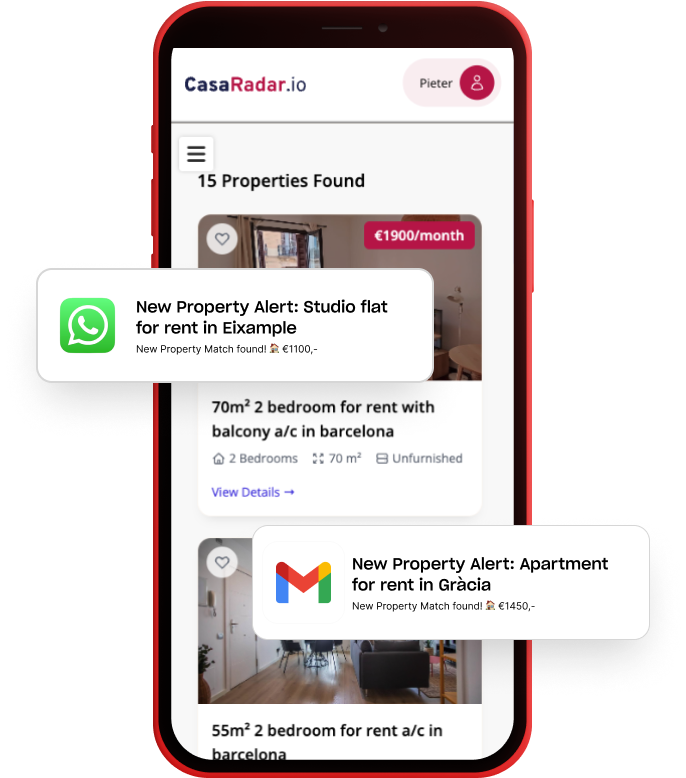
Where Rental House Listings Come to You
We track major and small real estate listing websites in Barcelona — so you don’t have to. Set your housing search criteria, and we’ll send you instant alerts the moment a new rental listing goes live that's fits your requirements.