

What Is a Contrato de Arrendamiento? Spain's Rental Contract Explained
A contrato de arrendamiento (rental contract) is a legally binding written agreement between a landlord (arrendador) and tenant (arrendatario) governing residential or commercial property rental, specifying rent amount, lease duration, maintenance responsibilities, utility costs, tenant rights, and landlord obligations, with minimum 5-year terms for residential contracts under Spanish rental law (LAU) and automatic annual renewal rights for tenants.
What Is Contrato de Arrendamiento Exactly?
The contrato de arrendamiento is Spain's formal rental agreement—the legal document protecting both landlord and tenant rights. It specifies every condition of the rental relationship from financial obligations to maintenance responsibilities.
Essential characteristics:
- Legally binding written agreement required by Spanish law (LAU)
- Specifies lease duration, rent amount, payment dates
- Details maintenance, utility responsibilities, and house rules
- Governs tenant rights including renewal and rent increase limits
- Standard minimum 5-year term for residential contracts
- Can be temporary (1-3 years) with written agreement
- Must comply with Spanish rental law (LAU) minimum standards
In Spain, you cannot legally rent without a written contrato de arrendamiento. Verbal agreements have no legal standing.
Types of Rental Contracts in Spain
1. Contrato de Vivienda Habitual (Principal Residence Contract)
Definition: Standard residential lease for a tenant's primary home, typically 5-year minimum term.
Key features:
- Applies to furnished or unfurnished apartments
- Default 5-year duration under LAU
- Automatic annual renewal (prórroga) after year 1
- Rent increase limited to maximum 2% + inflation index (IPC)
- Tenant has strong renewal rights
- Both parties can end after 5 years with 60-day notice
Best for: Long-term renters seeking stability and strong legal protections.
2. Contrato Temporal (Temporary/Fixed-Term Contract)
Definition: Time-limited lease under 5 years (typically 1-3 years) requiring explicit written agreement from both parties.
Key features:
- Shorter duration than standard contracts
- Explicit written terms required (cannot be default)
- Expires on specified date without automatic renewal
- Landlord can refuse renewal without cause at expiration
- Common for furnished apartments and tourist areas
- Same tenant protections apply (maintenance, habitability)
Best for: Short-term renters, furnished apartments, seasonal stays.
3. Contrato de Subarrendador (Subletting Agreement)
Definition: Lease where a tenant rents to a third party while maintaining their own lease with the landlord.
Key features:
- Requires original landlord's written permission
- Sub-tenant rights vary by contract terms
- Original tenant remains responsible to landlord
- Rent and obligations may differ from original lease
Best for: Temporary room rentals, peer-to-peer arrangements (with permission).
Minimum Contract Duration Under Spanish Law
Standard Rule: 5-Year Minimum
Under LAU (Ley de Arrendamientos Urbanos), residential rental contracts default to minimum 5 years:
Year 1: Full lease term; either party can terminate with 60-day noticeYears 2-5: Automatic renewal (prórroga) annually unless:
- Landlord provides legal cause for non-renewal (e.g., personal use)
- Tenant chooses not to renew
- Mutual agreement to end
After Year 5: Contract automatically extends year-to-year unless terminated with 30-60 day notice.
Exception: Temporary Contracts (1-3 Years)
Parties can agree in writing to temporary contracts:
- Requires explicit "contrato temporal" designation
- Cannot default to 5 years
- Expires on specified date
- No automatic renewal (landlord can refuse without cause)
- Still subject to LAU tenant protections
Legal requirement: Must be in writing in the contract itself. Verbal agreements to temporary terms are invalid.
Key Clauses Every Rental Contract Must Include
1. Identifying Information
Must specify:
- Landlord name, NIE/DNI, contact information
- Tenant name(s), NIE/passport number
- Property address (street, number, floor, door)
- Property identification (reference number or cadastral reference)
2. Lease Duration and Renewal Terms
Must state:
- Contract start date and initial term
- Whether contract is temporary or permanent
- Automatic renewal terms (if permanent)
- Notice period required to end contract (typically 30-60 days)
3. Financial Obligations
Must include:
- Monthly rent amount (in euros, exact figure)
- Rent payment date (typically 1st or 15th of month)
- Payment method (bank transfer preferred)
- Deposit amount (fianza) with INCASÒL reference
- What utilities/fees are included vs. tenant responsibility
4. Rent Increase Clause
Must specify:
- Annual increase percentage (cannot exceed LAU legal maximum of 2% + IPC)
- Review date for increases (typically annually)
- Notice period for increases (minimum 30 days required)
Legal maximum: Under LAU, rent increases cannot exceed 2% + current IPC (inflation index). Any clause exceeding this is void.
5. Maintenance and Repair Responsibilities
Standard allocation:
- Landlord responsibility: Structural, exterior, major systems
- Tenant responsibility: Interior decoration, light fixtures, minor repairs
- Emergency repairs: Landlord covers, tenant pays for non-urgent
6. Utility Costs and Expenses
Must specify:
- Which utilities are included in rent (water, electricity, gas, internet)
- Which utilities tenant pays separately
- Community fees (comunidad) responsibility
- Heating/cooling cost responsibility
7. House Rules and Use Restrictions
May include:
- Guest and overnight visitor policies
- Noise restrictions and quiet hours
- Pet policy (if any)
- Smoking prohibitions
- Subletting restrictions
- Parking and common area use
- Prohibition on business use
8. Deposit and Security Terms
Must state:
- Fianza amount (1-2 months' rent under LAU)
- INCASÒL registration requirement and reference
- What deductions are permitted
- Return timeline (30 days after contract end)
9. Cédula de Habitabilidad Reference
Must confirm:
- Property has valid cédula de habitabilidad
- Certificate reference number or expiration date
- Verification that habitable standards are met
10. Insurance and Liability
Should clarify:
- Tenant's responsibility for belongings (renter's insurance)
- Landlord's building/liability insurance
- Responsibility for accidental damage
11. Termination and Notice Procedures
Must specify:
- How either party can end the contract
- Required notice period (typically 30-60 days in writing)
- Process for returning keys and deposit
- Exit inspection requirements
12. Dispute Resolution
Should include:
- Jurisdiction (Barcelona courts if Barcelona property)
- Process for resolving complaints
- Reference to LAU arbitration procedures
- Contact information for complaint resolution
Red Flags: Contract Clauses to Avoid
1. Fianza Exceeding 2 Months' Rent
Issue: Violates LAU maximumAction: Request amendment or negotiate lower amount
2. "Tenant Responsible for All Repairs"
Issue: Removes landlord maintenance obligationsAction: Specify landlord covers structural/major systems
3. "No Complaints About Condition"
Issue: Waives habitability standards you're entitled toAction: Request written condition inspection and inventory
4. "Rent Increase Unlimited or Above 2% + IPC"
Issue: Violates LAU rent protectionAction: Clause is legally void; demand compliance
5. "Automatic Renewal Impossible" (on temporary contract)
Issue: Unfair if not clearly marked "temporal"Action: Ensure contract clearly states temporary status
6. "Subtenant Not Permitted" (in shared apartments)
Issue: May conflict with room-rental realityAction: Clarify subletting terms in writing if needed
7. "Landlord Can Enter Anytime"
Issue: Violates tenant privacy rightsAction: Require 48-hour notice clause for non-emergencies
8. "All Utilities Included Without Cap"
Issue: Can lead to excessive consumption chargesAction: Request usage caps or separate utility metering
9. "Termination Fees" (without cause specified)
Issue: Illegal under LAU; prevents tenant mobilityAction: Remove or clarify only apply to early termination
10. "Damage Deductions Landlord's Sole Decision"
Issue: No dispute resolution processAction: Add requirement for documented professional quotes
Contract Renewal Rights (Prórroga) Under LAU
Automatic Renewal Process
After the initial 5-year term, contracts automatically renew annually (prórroga) unless:
Tenant wishes to leave:
- Must provide 30-60 day written notice before expiration
- No penalty for non-renewal
- Retains full fianza (minus deductions)
Landlord wishes to non-renew:
- Requires legal just cause (e.g., personal residence use, demolition)
- Must notify tenant 60+ days before expiration
- Tenant has legal right to stay unless cause is proven
- Cannot refuse renewal merely to raise rent
Rent Increases During Prórroga
Each renewal can include LAU-compliant rent increase:
- Maximum 2% + current IPC annual increase
- Cannot exceed total 4% increase per year
- Requires 30-day notice before renewal date
Important Deadline: "Mes de Cortesía" (Courtesy Month)
The final month of your contract is the "cortesía month" (notice period):
- Provide written notice by last day of cortesía month
- Missing deadline may auto-extend contract another year
- Set calendar reminders for this critical date
- Use registered mail for formal notice
What Must Be in Writing vs. Verbal Agreements
MUST be in writing (legally binding):
- Contract duration and term
- Rent amount and payment terms
- Fianza amount and protection
- Maintenance responsibilities
- Utilities and community fees
- Subletting terms
- House rules
- Repair responsibilities
Cannot be enforced if verbal only:
- Promises about future improvements
- Agreements to change terms
- Rent reduction arrangements
- Extended payment terms
- Temporary accommodations
- Deposit "return promises"
Critical rule: Get everything in writing. Spanish courts won't enforce verbal agreements against written contracts.
Tenant Rights in the Contrato de Arrendamiento
Your contract legally guarantees:
- Habitability right: Property must meet legal standards (cédula required)
- Rent stability: Increases limited to 2% + IPC maximum
- Renewal right: Automatic renewal unless just cause shown
- Maintenance right: Landlord must maintain structural integrity
- Privacy right: Landlord cannot enter without notice (except emergencies)
- Dispute resolution: Access to LAU arbitration procedures
- Fianza protection: Deposit held by third-party and returned fully
- Legal enforceability: Contract is binding under Spanish law
Contract Checklist Before Signing
- [ ] Read contract completely (in Spanish if possible)
- [ ] Verify all identifying information is accurate
- [ ] Confirm rent amount, payment date, and method
- [ ] Check fianza amount (1-2 months max under LAU)
- [ ] Verify INCASÒL registration requirement stated
- [ ] Confirm cédula de habitabilidad exists and is referenced
- [ ] Review maintenance responsibility allocation
- [ ] Confirm utilities and community fees clearly listed
- [ ] Check rent increase clause (maximum 2% + IPC)
- [ ] Verify contract duration and renewal terms
- [ ] Confirm dispute resolution procedures
- [ ] Request copy before signing
- [ ] Keep original and copy for your records
- [ ] Request translation if contract is Spanish-only
Contrato de Arrendamiento: Key Takeaways
- Legally required: All Spanish rentals must have written contracts complying with LAU
- Minimum 5 years: Default term under LAU for residential contracts
- Automatic renewal: After year 1, contracts renew annually (prórroga) unless terminated
- Rent limits: Increases capped at 2% + IPC annually under LAU
- Key clauses: Must include financial terms, duration, maintenance, utilities, deposit
- Red flags: Beware fianza exceeding 2 months, unlimited rent increases, no repairs responsibility
- Tenant rights: Habitability, renewal, maintenance, privacy all legally guaranteed
- Nothing verbal: All terms must be written; verbal agreements don't bind landlords
Always read and understand your rental contract before signing. This document is your primary legal protection in Spain.

Ready to Find Your Rental Place in Barcelona?
Frequently Asked Questions About Contrato De Arrendamiento Spain
Here are answers to some of the most common questions we receive.
What is the difference between contrato de arrendamiento and LAU?
Contrato is the written agreement; LAU is the law governing it. Your contract must comply with LAU minimum standards.
Can I have two rental contracts simultaneously in Spain?
Legally yes, but some contracts may prohibit maintaining another rental. Clarify with landlords before signing.
What happens to my contract if landlord sells the property?
Contract transfers to new owner. Your rights continue unchanged. New owner cannot demand new fianza.
Is there a standard Spanish rental contract template?
No single official template, but legal templates exist through notarios (notary publics) for standardized contracts.
Can contract require 6-month notice to end?
LAU minimum is 30-day notice after first year. Longer notice clauses may be unenforceable.
What if contract doesn't mention cédula de habitabilidad?
You can still demand it exists. Missing cédula voids contract. Demand verification immediately.
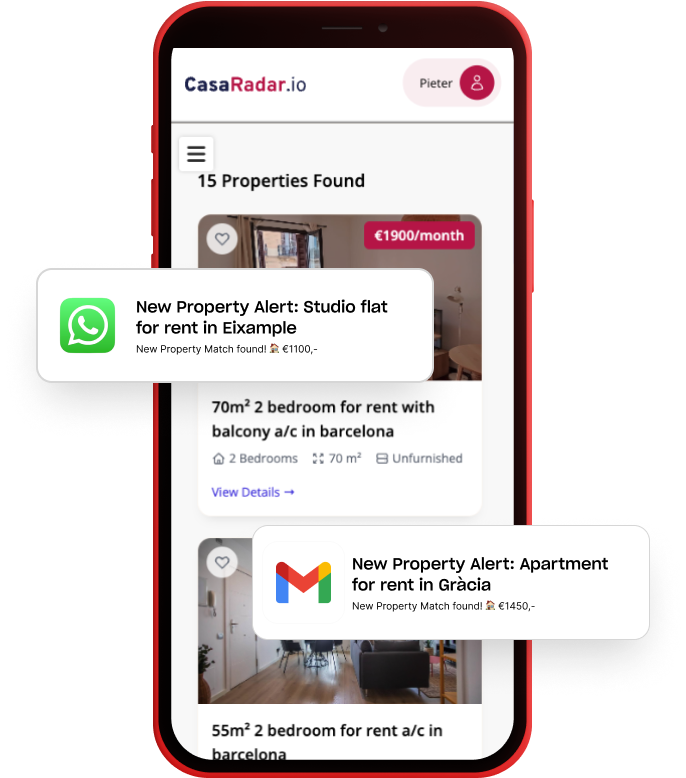
Where Rental House Listings Come to You
We track major and small real estate listing websites in Barcelona — so you don’t have to. Set your housing search criteria, and we’ll send you instant alerts the moment a new rental listing goes live that's fits your requirements.