

The Best Time to Look for Rentals in Barcelona (2026 Guide)
Finding an apartment in Barcelona often depends on timing. The rental market rises and falls as students, digital nomads, expats, and seasonal workers move in and out of the city. Choose the right moment, and the search is smooth — fewer competitors, more options, better prices. Choose the wrong one, and even average listings disappear in minutes. This guide explains exactly when to search, what to expect each month, and how to gain an advantage in any season.
Quick Answer: When to Rent in Barcelona
Best months to search: January, February, March, October
Hardest months to search: June, July, August, September
Best month overall: February
Cheapest months: January, February, November, December
Most expensive months: June, July, August, September
In summary: Barcelona's rental market is heavily influenced by the academic calendar and tourism cycles. Winter months offer the easiest conditions and lowest prices, while summer sees peak demand and premium rates. If you have flexibility on your move-in date, choosing to search during off-peak months can reduce your stress, expand your options, and save you hundreds of euros per month.
Why Timing Matters So Much in Barcelona
The Barcelona rental market isn't static. Supply and demand fluctuate dramatically throughout the year, creating distinct seasons where your experience as a renter changes dramatically.
The academic calendar shapes everything. Barcelona is a university city with tens of thousands of students. Most semesters begin in September, creating a tidal wave of demand that crashes through the market. Landlords know this, and they adjust their behavior accordingly—delaying new listings, raising asking prices, and becoming less flexible on terms.
Digital nomads and remote workers amplify summer demand. Spring and summer bring an influx of location-independent workers seeking warm weather and vibrant culture. Many can choose when to travel, and they choose June through September. This group competes directly with students and families, creating a perfect storm of competition.
Tourism hijacks the short-term supply. As Barcelona's tourism season peaks, many landlords convert long-term rental properties into Airbnb and tourist apartments. These tend to be the smaller, more affordable units—exactly what first-time renters and budget-conscious arrivals are searching for. Between June and September, a meaningful portion of the supply simply disappears from the long-term market.
Landlord behavior changes seasonally. During off-peak months, landlords are more flexible. They'll negotiate terms, accept lower deposits, agree to shorter contracts, or list properties more affordably to ensure they stay occupied. During peak months, landlords hold all the power and know they can be rigid about requirements and pricing.
Price variations are real and significant. The same apartment can rent for €200 fewer per month in February than in September. That's nearly €2,400 per year—enough to change your entire relocation budget. Understanding these patterns helps you time your search strategically or plan your move-in date accordingly.
To learn more about overall rental costs and what affects pricing, check out our guide on how-much-cost-rent-barcelona.
Month-by-Month Breakdown (Detailed Analysis)
January — Very Good
January is one of the strongest months to search, and it arrives with momentum from the New Year. The city has just reset after the Christmas holidays. People have made resolutions to move, start fresh jobs, or embrace new living situations. You'll see a steady stream of new listings as landlords reactivate properties that were dormant over the holiday period.
Competition is low because most people are recovering from holiday spending or waiting until spring to move. This gives you breathing room to browse carefully, view multiple properties, and make thoughtful decisions without the pressure of bidding wars or same-day application deadlines.
January is particularly good for long-term renters and expats starting new jobs in January or February. If you're arriving around this time, you have a genuine advantage.
Practical tip: Start your search in early January (January 2-10) to catch the wave of post-holiday listings before they gain traction. Landlords are eager to fill vacant units early in the year.
February — Excellent (Best Month Overall)
February is widely considered the best month to search for rentals in Barcelona. The inventory is strong, demand remains manageable, and landlords are still willing to negotiate. You've moved past the holiday period without hitting summer rush, and the market feels balanced.
This month sees some of the lowest asking prices of the year because landlords know they need to compete for tenants. Fewer bidding wars occur, applications are considered carefully rather than rejected out of hand, and you're more likely to negotiate on deposit amounts or lease terms.
February is ideal for almost everyone—first-time renters, expats with flexible move-in dates, families, and remote workers. If you can time your arrival for February, you're starting from a position of strength.
Practical tip: If you have any flexibility in your move-in date, this is your golden window. Even if your actual arrival is in March or April, consider aiming to submit applications in February when landlord motivation is highest.
March — Good
March maintains much of February's advantage, though competition begins to rise slightly. Spring is arriving, the weather improves, and more people begin considering their summer moves. However, you still have a substantial advantage over summer searchers.
More furnished and mid-term rental options become available in March as landlords adjust their inventory strategies for the warmer months. This is ideal for remote workers, digital nomads planning short-term stays, and people who need flexibility before committing to a long-term lease.
Availability remains strong enough that you shouldn't feel rushed into poor decisions, but competition has clearly increased. Response times matter more in March than in February.
Practical tip: If you're searching in March and find a good flat, don't delay. The window of moderate competition is closing, and May will bring new urgency.
April — Moderate
April is a transition month with mixed conditions. Tourism is increasing as Easter and spring weather draw visitors, but the true summer rush hasn't arrived yet. You'll find decent options, but they move faster than they did in previous months.
The advantage of April is that some summer-focused searches haven't started yet, meaning you face less competition from students and nomads planning June moves. However, you'll notice landlords becoming slightly less flexible and listing prices beginning to creep upward.
April works reasonably well if you're organized and can respond quickly to listings. It's not ideal, but it's manageable, especially if you have any flexibility in your neighborhood choices.
Practical tip: In April, cast a wider net geographically. Consider neighborhoods slightly further from the city center where competition remains lower, even as central areas tighten up.
May — Mixed (Transition Month)
May is unpredictable. Some landlords begin holding back listings, wanting to assess summer demand before committing long-term properties. Others prepare properties for seasonal rentals, converting them away from the traditional rental market.
Availability can vary significantly depending on the neighborhood and property type. Prime central locations may already feel constrained, while peripheral areas still have reasonable stock. Prices have clearly risen from spring lows, but they haven't peaked yet.
This is a month where speed matters more than strategy. If you see a property you like in May, you should apply quickly rather than waiting for a better option to appear.
Practical tip: If searching in May, prioritize neighborhoods that don't typically convert to tourist rentals. Family-oriented areas like Sarrià-Sant Gervasi or Gràcia are often more stable than beachside or Gothic Quarter properties.
June — Hard (Peak Season Begins)
June marks the beginning of true peak season. Students finish their academic year, digital nomads book summer trips, and families plan their moves before the school year ends. Competition noticeably intensifies, and landlords know they hold the advantage.
Seasonal rentals accelerate the supply problem. Many of the city's most affordable and central properties begin converting to tourist apartments. This disproportionately affects budget-conscious renters searching for studios and one-bedroom flats in walkable neighborhoods.
Prices have clearly risen from spring levels, and asking prices are now firmer—landlords are less willing to negotiate. You'll still find listings, but they require more effort to secure. The easygoing, patient approach that worked in February or March will fail here.
Practical tip: If you must search in June, use real-time alerts across all major platforms. New listings disappear within hours, not days. Ensure all your documentation is ready before you start, and be prepared to apply same-day when you find something suitable.
July — Very Hard
July is genuinely difficult. The summer season is in full swing, international arrivals peak, and many temporary workers are settling in for the next few months. Meanwhile, supply has contracted significantly as more properties shift to tourist models.
Many apartment agencies reduce their hours during July, working on skeleton staff while owner-operators take holiday. This creates artificial supply constraints. The rental market feels crowded and stressful, with competing applications arriving before you've even finished your viewing.
Long-term rental options are limited, and landlords are at peak bargaining power. You'll face higher prices, stricter requirements, and less flexibility on terms. If you find something decent, it will likely disappear before you can submit a full application.
Practical tip: If searching in July, use property alerts aggressively. Check for new listings first thing in the morning and immediately after 5 PM—the two peak upload windows. Have everything documented and be prepared to move at a moment's notice.
August — Extremely Hard (The Worst Month)
August is the most challenging month to search for rentals in Barcelona. The city empties as locals escape the intense summer heat, but simultaneously, tourism reaches its absolute peak. The paradox is painful: fewer landlords, fewer agents responding to inquiries, yet persistent competition from international arrivals.
Supply is at its lowest point of the year. Many landlords take August off, unprepared to manage new tenants. Agencies have minimal staff. The properties that remain available tend to be the least desirable or most expensive. Waitlists form behind popular listings within minutes.
This is the month to avoid if you have any choice in the matter. Even experienced renters and those with strong documentation find the process frustrating and time-consuming. The reward is minimal—you'll find something eventually, but at maximum stress and often at maximum price.
Practical tip: If you absolutely must arrive in August, consider booking temporary accommodation (an Airbnb or hostel) for your first 2-3 weeks. Use that time to explore neighborhoods, meet agents in person, and search without desperation. You'll find better options once you're on the ground and landlords see you're serious.
September — The Hardest Month (Avoid If Possible)
September is the single most competitive month for rentals in Barcelona. Students, families, and nomads all return simultaneously. University semesters begin, companies' fiscal years align with September starts, and summer travelers transition to longer-term arrangements.
This creates the perfect storm: maximum demand converging with landlords who are eager to fill vacancies before winter. Prices peak. Competition is fiercest. Good apartments are claimed within hours. You'll receive rejection after rejection, or worse, discover applications have already been submitted by other applicants before you even finished your viewing.
If you must search in September, you need everything prepared before you begin. Your references, proof of income, background check, passport copies—everything should be organized and ready to send within minutes of expressing interest. Applications submitted hours later are too late.
Practical tip: If arriving in September is unavoidable, begin your search in July while competition is "only" very high. Aim to secure something by mid-August, giving you time to break the lease or negotiate terms if a better option appears in September. Alternatively, plan to arrive in early September and search before the main tide of university students hits in mid-September.
October — Good (Market Calms)
October brings relief. The September surge has subsided, landlords have filled many vacancies, and demand normalizes. New listings reappear as landlords who were reluctant to list during summer update their inventory.
The market feels manageable again—not as relaxed as February, but far more reasonable than anything June through September offered. Prices have come down slightly from peak, and landlords are beginning to be flexible again.
October is ideal for those who missed the September wave or who prefer autumn weather for moving. If you couldn't secure something in September and don't mind arriving a month later, October is a genuine reset point.
Practical tip: If your original plan was a September arrival, moving your target to October can dramatically improve your experience. One month of patience yields substantially better options and lower stress.
November — Very Good
November is quiet and underrated. Most international arrivals have already occurred, peak tourism has ended, and you're heading into the slower winter period. Yet inventory remains decent, and landlords have shifted back to a collaborative mindset.
This is a strong month for long-term renters and anyone planning an extended stay. Landlords are motivated to fill properties for winter and willing to discuss flexible terms. Prices are clearly lower than summer peaks, approaching winter lows.
Many people search in November planning January or February move-ins, giving landlords time to coordinate transitions. This works beautifully for everyone—you search under favorable conditions, and landlords have time to prepare the property.
Practical tip: Use November to plan ahead. If you're arriving in January, search in November when the market is calm and landlords appreciate advance notice. You'll often get better pricing and terms than if you waited until December.
December — Good But Slow
December offers low competition and reasonable availability, though the holiday season can slow down the process. Some agencies reduce their hours, and landlord responsiveness dips as people focus on holidays and year-end activities.
This creates an interesting dynamic: less competition, but also less urgency and slower communication from landlords. Your applications might not be reviewed until after the New Year.
The advantage of December is cost. Rents are low, and you face virtually no competition. The disadvantage is that the process can feel stalled while everyone focuses on holidays. Good options exist, but they require patience and longer decision timelines.
Practical tip: December searches work well for January move-ins because landlords expect you to be planning ahead. Submit applications early in December to ensure they're processed before the year ends and you can finalize agreements by early January.
Seasonal Price Patterns
Barcelona's rental prices follow predictable seasonal patterns, with significant differences between peak and off-peak months.
Off-peak pricing (cheapest months): January, February, November, and December see the lowest average rents. A typical one-bedroom flat might cost €750-850 in these months. These prices reflect low demand and landlord willingness to negotiate.
Mid-season pricing: March through May and October see moderate prices, typically 5-10% higher than off-peak. The same one-bedroom might cost €800-900. These are transitional months where prices are rising or falling.
Peak pricing (most expensive months): June through September see the highest rents, sometimes 15-20% above off-peak levels. The same one-bedroom might cost €900-1,000 or more. September is consistently the peak.
The actual difference: This means an apartment renting for €750/month in February might command €900/month in September—that's €150 more per month, or €1,800 additional per year for the exact same property. For a family or someone on a tight budget, this difference is substantial.
Why the difference exists: Peak-season premium is driven by both genuine demand (more renters searching) and landlord psychology. During peak season, landlords know they'll fill vacancies quickly and can charge more. During off-peak, they're motivated by availability risk and price lower to ensure occupancy.
Mid-term rentals are more affected than long-term. Seasonal patterns hit furnished and mid-term rentals (3-12 months) harder than unfurnished long-term contracts. Tourist-conversion properties (short-term rentals) are extremely seasonal. Unfurnished long-term rentals are more stable but still follow the trend.
How to use this knowledge: If you have flexibility on move-in timing, arriving in February versus September could save you €1,800 per year. Even a modest shift—arriving in October instead of September—typically saves 5-10%. Build your moving timeline around the market calendar when possible.
Who Should Search When?
Different types of renters benefit from different timing strategies based on their constraints and needs.
Students
Best timing: Begin searching in June, before the September rush. Finish your search by late August.
Why June: You have the advantage of planning ahead while most students haven't started searching yet. Landlords know student season is coming and are prepared to negotiate. June has more available student-friendly housing (furnished flats, flexible terms) than May.
Avoid September entirely: By September, most quality student housing is claimed. You'll be competing with thousands of fellow students for the remaining options. Unless you have connections or extraordinary documentation, September searches are frustrating.
Planning timeline: Start browsing in May, reach out to agents and property groups in June, schedule viewings for late June or July, and aim to have a signed lease by August 1. This gives you time to arrange logistics before semester starts.
Digital Nomads and Remote Workers
Best timing: January through March or October through November.
Why these periods: These windows offer ideal conditions—low competition, good availability, and landlord flexibility. Because you typically need furnished flats with shorter lease terms, you have more inventory options during these periods when landlords are listing mid-term properties.
Your superpower is flexibility: Unlike students (tied to semester dates) or expats (tied to job start dates), you can often choose when to arrive. Use this advantage. Rather than arriving in July when everything is scarce and expensive, plan to arrive in February when your options multiply and prices drop.
Summer nomad trap to avoid: Many digital nomads plan multi-month European tours timing Barcelona for summer. This floods the market with competition right when supply is lowest. If your timeline allows, consider arriving in spring and staying through fall, or visiting Barcelona in October-November when the summer crowd has dispersed but the weather is still good.
For more information about living in Barcelona as a digital nomad, see our guide on barcelona-for-digital-nomads-where-to-live-how-to-rent-fast.
Expats Starting a New Job
Best timing: Align your job start with off-peak rental months if possible. If that's not feasible, start searching 2-3 months before your arrival.
If arriving September: This is the most common scenario and the most challenging. September job starts are standard globally. Begin your search seriously in July—before peak competition reaches its maximum. Aim to secure something by early September, even if it's not perfect, rather than searching once you've arrived desperate.
If arriving other months: You have genuine flexibility. Negotiate with your employer if possible to start in February or October, when rental searching is far easier. Even one month's delay can transform your experience.
For expats with corporate support: If your company provides relocation assistance or housing allowances, use that to your advantage. Hire a local relocation agent who understands the market and can act on your behalf during off-season months when landlord responsiveness is good.
For detailed guidance on renting as an expat, see our guide on how-to-get-accepted-for-an-apartment-in-barcelona-tips-for-expats.
Families
Best timing: October through February offers the calmest searching conditions.
Why these months: Schools operate on similar calendars, so September arrivals often mean school starts. October through February avoids that deadline pressure. You'll find families searching for winter stability rather than desperately timing school enrollments.
Avoid summer months: Beyond the general market stress, summer is also when families travel, making summer rentals less stable. Landlords know family situations change seasonally. Winter is when families plant themselves for several months.
Neighborhood stability matters: Families benefit most from searching during months when neighborhood inventory is more stable. Outer neighborhoods (Sarrià-Sant Gervasi, Horta-Guinardó, Les Corts) maintain better family-friendly options even during peak season, making autumn and winter searches in these areas particularly rewarding.
When to Start Your Search (Timeline Guide)
Timing your search startup is as important as timing your move-in date.
Arriving in 2-3 Months
Start action: Begin browsing now to understand the market, neighborhoods, and price ranges. Don't seriously contact agents yet.
Contact agents: Reach out about 30 days before your target move-in date. Most landlords don't want to commit to lease 60+ days in advance, and listings may change before you're ready.
Application timing: Submit applications 15-30 days before your desired arrival. This gives landlords time to process paperwork, reference checks, and arrange viewings.
Arriving in 1 Month
Start action: Begin searching seriously immediately. You're in the sweet spot where landlords will engage with you (near-term enough to be credible, far enough to allow processing time).
Response speed: Reply to messages within an hour. At one-month distance, landlords assume you're committed, and slow responses signal you're not serious.
Application strategy: View properties within 3-5 days of listing; apply within 24 hours if interested. One-month timelines don't allow for browsing leisure.
Arriving in 1-2 Weeks
Start action: Begin searching today, but shift to speed and flexibility as your primary strategy.
Documentation: Have everything pre-prepared. Professional references, proof of income, background information, and copies of ID should be ready to send within minutes.
Neighborhood flexibility: Be willing to expand your neighborhood search. Your timeline constraint means fewer good options, but widening geography creates more possibilities.
Temporary first option: Consider booking 5-10 days of temporary accommodation (hostel, Airbnb) when you arrive. This removes desperation from your search and allows you to view properties in person, negotiate better, and make confident decisions.
Searching from Abroad
Video tours: Never commit to an apartment unseen. Insist on video tours where the landlord or agent walks through the flat, shows key details, and lets you ask questions live.
Verified contracts: Use platforms with verified digital contracts and money protection. Never send deposits before contract signing.
Local contact: If possible, have a local friend or your future employer visit properties on your behalf and provide assessment.
For detailed guidance on the complete rental process, see our guide on step-by-step-how-to-rent-your-first-apartment-in-barcelona-complete-2025-guide.
If You Must Search During June-September (Peak Season)
Sometimes your arrival date is fixed, and you have no choice but to search during peak season. Here's how to maximize your chances.
Preparation is Everything
Have all documentation ready before you search. This means:
- Copies of your passport or ID (both sides, color)
- Proof of employment or job offer letter
- Last 2-3 months of payslips or bank statements
- References from previous landlords or employers
- Background check (if you have time to obtain one before arriving)
- A 1-2 paragraph cover letter explaining who you are and why you're reliable
Why this matters: During peak season, landlords receive multiple applications per listing per hour. Without prepared documentation, you'll be rejected while other applicants provide their information immediately.
Broaden Your Geographic Net
During off-peak months, you can be picky about neighborhoods. During peak season, this luxury disappears. Be willing to explore:
- Neighborhoods 20-30 minutes from your workplace
- Up-and-coming areas slightly further from central attractions
- Residential zones less appealing to tourists (Horta, Sant Andreu, Poblenou)
You'll often find better inventory and lower prices in neighborhoods tourists don't frequent, even during peak season.
Response Speed is Survival
When you see a listing you like:
- Message immediately—within minutes, not hours
- Suggest multiple viewing times for landlord convenience
- Clearly state your timeline and commitment level
- Attach your documentation in your first message
Peak season moves fast. Hesitation means missing out. Properties that don't show strong interest are removed within hours.
Use Real-Time Alerts
Set up alerts on every major platform (Idealista, Fotocasa, Wallapop, Airbnb, local agency sites). Consider services that aggregate multiple platforms and push notifications immediately when new listings appear.
These tools are valuable year-round but absolutely essential during June-September when inventory is scarce and competition is intense.
Apply Immediately
Once you've viewed a property and decided you want it, apply same-day or next-morning. Late applications—even applications submitted two days later—will be rejected in favor of same-day applicants. Landlords use application timestamp as a tie-breaker when multiple qualified candidates exist.
Never Send Money Before Signing
This is always true, but especially critical during peak season when scams proliferate. Verify every landlord, request written contracts before deposits, and never pay based on promises of future viewings.
For scam avoidance, see our guide on avoid-rental-scams-barcelona.
Consider Temporary Housing First
If you're arriving during peak season without a flat secured, book 10-14 days of temporary accommodation. Use this time to:
- Explore neighborhoods physically
- Build relationships with local agents
- Schedule multiple viewings
- Negotiate from a position of being present and serious
- Take advantage of better options that appear once you're in-country
Many short-term renters actually report better final apartments because they searched from Barcelona rather than from abroad, despite the additional temporary housing cost.
When New Listings Go Live (The Timing Edge)
Understanding when landlords post listings gives you an information advantage.
Morning peak (8:00-11:00 AM): Most new listings appear first thing in the morning. Landlords and agents list properties as their first task of the day. This window offers the largest selection of truly new inventory.
Evening secondary peak (5:00-8:00 PM): A second smaller wave of listings appears as agents finish viewings and update inventory. This is less consistent than morning but still significant.
Day-of-week patterns: Monday and Tuesday see the highest volume of new listings. Landlords prepare weekend viewings or process weekend applications on Mondays. Friday and weekend listings are significantly lower.
How to use this: Set alerts to notify you between 8:00-11:00 AM weekdays. Check alerts again around 6:00 PM. Check manually again first thing in the morning before your alerts process overnight additions. Early birds catch better inventory.
During peak season (June-Sept), check more frequently. Morning inventory disappears rapidly. By noon, many morning listings already have applications. Checking at 8:15 AM versus 8:45 AM can mean the difference between seeing something first or seeing someone else's application.
For more about using alerts effectively, see our guide on barcelona-house-and-room-rental-alerts-get-instant-notifications-from-all-major-and-small-housing-platforms.
How to Search Faster Any Month
Regardless of when you search, these strategies accelerate your process.
Stay prepared: Have your documentation ready before you actively search. This is the single biggest advantage you can create. When a great listing appears, you can apply within minutes, not hours.
Set alerts across all platforms: Don't rely on browsing manually. Use automated alerts that push notifications to your phone. Check them obsessively during peak season, regularly during off-season.
Message agents clearly and professionally: Write genuine interest messages that include your timeline, situation, and one key question about the property. This shows you're serious. Avoid generic "Is this still available?" messages that signal you're blast-messaging dozens of listings.
View flats as soon as possible: Schedule viewings within 24-48 hours of listing if possible. Delayed viewing often means the property is already rented to someone who moved faster.
Apply immediately after viewing: Don't deliberate or compare after a viewing if you like the place. Apply same-day or next-morning. You can always withdraw if something better appears, but you won't get a second chance if you delay applying.
Follow up appropriately: If you haven't heard back within 24-48 hours, send a polite follow-up. Agents are busy, especially during peak season, and a reminder doesn't hurt. Never send multiple urgent messages—that signals desperation and pushes landlords away.
For comprehensive guidance on speeding up your search, see our guide on how-to-find-an-apartment-in-barcelona-fast-2025-guide.
Find Your Barcelona Apartment at the Right Time — With the Right Tools
Understanding Barcelona's rental calendar is essential, but acting on that knowledge requires the right resources. CasaRadar helps you search smarter in any season.
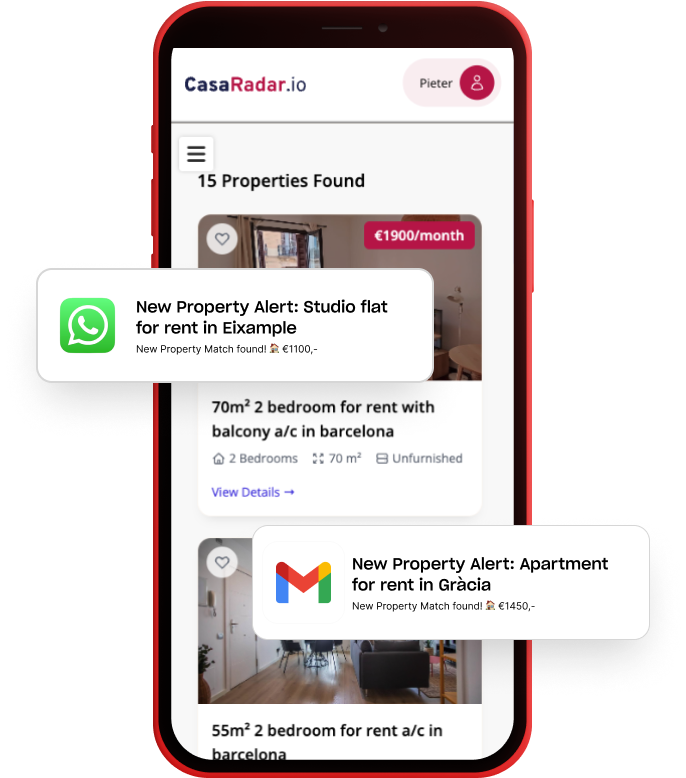
Instant alerts from all platforms: Rather than checking multiple sites manually, CasaRadar aggregates listings from Idealista, Fotocasa, Airbnb, agency websites, and smaller platforms, sending real-time notifications when new properties match your criteria. Never miss a listing again.
Smart timing insights: Our market analysis tools show you which neighborhoods are hottest, when prices typically shift, and where inventory is tightest. Search with confidence knowing you're making informed decisions based on market data.
Verified landlords and protection: We work with vetted landlords and property managers, reducing scam risk and protecting you throughout the rental process.
Whether you're searching in ideal February conditions or challenging September situations, having the right tools makes the difference between a smooth process and a frustrating scramble.

Ready to Find Your Rental Place in Barcelona?
Frequently Asked Questions About the Best Time for Renting in Barcelona
Here are answers to some of the most common questions we receive.
What is the best month to rent an apartment in Barcelona?
February is the single best month overall. It combines strong inventory, low competition, reasonable prices, and landlord flexibility. January, March, October, and November are also excellent. If you have any flexibility on your move-in date, timing your search to end in one of these months dramatically improves your experience.
Is it harder to find an apartment in Barcelona in summer?
Yes, significantly harder. June through September sees peak competition, lowest inventory, and highest prices. August is the absolute worst month; July is nearly as bad. September is the most competitive because everyone from students to families arrives simultaneously. If you can avoid summer, do so.
How far in advance should I start looking for a Barcelona apartment?
Start browsing 2-3 months before your desired move-in to understand neighborhoods and pricing. Begin seriously contacting agents 30-60 days before arrival. Submit applications 15-30 days before your preferred move-in date. This timeline gives landlords time to process paperwork while confirming you're genuinely interested and nearby. During peak season (June-September), compress this timeline. You may only have 2-3 weeks between deciding to move and needing to secure a flat.
Are rents cheaper in winter in Barcelona?
Yes. January, February, November, and December are 10-20% cheaper than summer peaks. A one-bedroom that costs €900 in September might cost €750-800 in February. This savings applies primarily to long-term rentals; short-term and tourist apartments follow different patterns based on actual tourism.
Can I find a good apartment in September in Barcelona?
You can find apartments in September, but finding good ones that match your preferences is difficult. September is the most competitive month, and good options are claimed by multiple applicants within hours. If you must arrive in September, prepare extensively, start searching in July, and be flexible on neighborhoods. Many people successfully navigate September searches, but it requires more effort than off-season searches.
What time of day do new Barcelona listings appear?
Most new listings appear between 8:00-11:00 AM, with a secondary peak around 5:00-8:00 PM. Checking first thing in the morning gives you the best selection. Waiting until afternoon often means good options have already been claimed or have received applications from earlier viewers. Monday and Tuesday see the highest volume of daily listings.
Where Rental House Listings Come to You
We track major and small real estate listing websites in Barcelona — so you don’t have to. Set your housing search criteria, and we’ll send you instant alerts the moment a new rental listing goes live that's fits your requirements.