

Rooms for Rent in Barcelona: The Complete Student Guide for 2026
Rooms for Rent in Barcelona: The Complete Student Guide for 2026
Barcelona is one of Europe's best student cities: world-class universities (UB, UAB, UPC, Pompeu Fabra, ESADE), affordable living, Mediterranean weather, and a culture built around shared student apartments. But finding a room under €600/month in a good neighborhood requires knowing where to look and how the system works. Average room prices range from €400–€750/month depending on neighborhood and furnishing. Most students rent "pisos compartidos" (shared apartments) with 2–5 roommates, creating built-in social networks and splitting costs. Platforms like Badi, Idealista (habitaciones section), Erasmusu, and university housing offices have rooms constantly available.
The best student neighborhoods—Gràcia, Sants, Poble Sec, and Raval—balance affordability, connectivity to universities, and student-friendly vibes. Timing matters too: Start searching in June for September move-ins (peak season, but also most availability). This guide covers room prices, best platforms, neighborhood guides, university-specific advice, piso compartido etiquette, budget breakdowns, and viewing tips so you can find your Barcelona room confidently.
Average Room Prices by Barcelona Neighborhood
How much does a room actually cost in Barcelona for students in 2026?
Room prices depend heavily on neighborhood and demand. Here's the breakdown:
Premium neighborhoods (€600–€750/month)
- Gràcia: €650–€750 (trendy, walkable, university adjacent)
- Eixample: €600–€750 (central, near transport, slightly pricier)
- Poble Sec: €550–€700 (hip, nightlife, short metro to universities)
Mid-range neighborhoods (€450–€600/month)
- Sants: €450–€600 (residential, safe, good metro connections)
- Raval: €400–€550 (artsy, walkable to university, cheaper)
- Poblenou: €480–€620 (creative district, becoming trendy, good value)
Budget neighborhoods (€350–€500/month)
- Collblanc: €350–€450 (outer but safe, metro direct to UAB)
- Clot: €400–€500 (working-class area, quiet, good value)
- Artigues: €300–€420 (far from city center, very cheap, long commute)
Factors affecting room price:
- Furnishing: Furnished €50–100 more/month than unfurnished
- Utilities included: If landlord pays, add €50–80 to asking price
- Size: Larger rooms (12–15 m²) = €50–100 more
- Bathroom sharing: Private bathroom = €100–150 premium over shared
- Kitchen access: Full kitchen always included; quality varies
- Demand season: June–September = 10–15% price premium (peak student season)
Real example prices (January 2026):
- Gràcia, furnished, utilities included, shared bathroom: €700/month
- Sants, unfurnished, utilities separate, shared bathroom: €500/month
- Raval, furnished, utilities included, shared bathroom: €450/month
- Collblanc, unfurnished, utilities separate, shared bathroom: €380/month
Best Platforms for Finding Student Rooms in Barcelona
Which websites should I use to search for student rooms?
1. Badi (www.badi.com) — BEST FOR STUDENTS
- Specialty: Rooms in shared apartments, student-oriented
- Price range: €350–€750/month
- Features: Community reviews, landlord verification, chat in app
- Pros: Easy interface, many student filters (Erasmus, duration, party level)
- Cons: Some listings aren't verified; scams exist (use platform escrow for payment)
- Timeline: Response in 24–48 hours typical
- Availability: 500–1,000+ rooms listed daily in Barcelona
2. Idealista (Habitaciones section) — BROADEST SELECTION
- Specialty: All rental types including rooms
- Price range: €300–€850/month
- Features: Filter by neighborhood, utilities, furnished, distance to university
- Pros: Largest database (combines professional agents + private landlords)
- Cons: Mixed quality, scams exist, slower response than Badi
- Timeline: Response in 24–72 hours typical
- Availability: 2,000+ room listings Barcelona-wide
3. Erasmusu (www.erasmusu.com) — ERASMUS STUDENT FOCUS
- Specialty: Rooms for Erasmus students specifically
- Price range: €350–€700/month
- Features: Roommate reviews, student-only community, apartment ratings
- Pros: Community of student landlords (understanding of student needs)
- Cons: Higher prices than average (Erasmus premium); some fake listings
- Timeline: Response in 12–48 hours typical
- Availability: 800–1,200+ Erasmus-specific listings
4. University housing offices — OFFICIAL CHANNELS
- Availability: UB, UAB, UPC, Pompeu Fabra, ESADE all maintain housing lists
- Price range: €400–€700/month (varies by program)
- Pros: Vetted landlords, institution backing, some university-owned dorms
- Cons: Limited supply, often need to apply early (June for September)
- How to access: Email housing office or check university website
- Timeline: Early access if enrolled; lists open May–June for fall
5. HousingAnywhere (www.housinganywhere.com) — MID-TERM FOCUSED
- Specialty: Rooms and apartments, flexible lease terms
- Price range: €400–€750/month
- Features: Verified tenants, payment protection, lease flexibility
- Pros: Legal contracts included, international-friendly, medium-term OK
- Cons: Slightly pricier than Badi for rooms; more corporate process
- Timeline: Response in 24–48 hours typical
6. Uniplaces (www.uniplaces.com) — STUDENT HOUSING PORTAL
- Specialty: Student rooms and apartments
- Price range: €350–€700/month
- Features: University partnerships, student community, verified reviews
- Pros: Easiest for international students, clear lease terms
- Cons: Premium pricing (rooms often €50–100 more than market)
- Timeline: Response in 24–48 hours
7. Facebook Groups — GRASS-ROOTS (USE CAREFULLY)
- Groups to search: "Expats in Barcelona," "Rooms Barcelona," "Barcelona Housing"
- Price range: €300–€700/month (highly variable)
- Pros: Direct landlord contact, sometimes deals
- Cons: Unvetted, scam risk high, no dispute resolution
- Timeline: Immediate direct contact, but verify legitimacy
- Warning: Meet in person before sending money; never wire without seeing apartment
Recommendation order for students:
- Badi (easiest, fastest, student-focused)
- Idealista (broadest selection, backup option)
- University housing office (if available; official channel)
- Erasmusu (if Erasmus; community support)
- Facebook groups (only as last resort; high scam risk)
Best Neighborhoods for Students in Barcelona
Which neighborhoods are best for student life, affordability, and university access?
Gràcia: The student favorite
- Vibe: Bohemian, artsy, walkable village feel inside city
- Room price: €650–€750/month
- Universities: Close to UB (Universitat de Barcelona), Pompeu Fabra nearby
- Transport: Metro L3, L4; good bus connections
- Dining: Tons of cheap tapas bars, cafés, student restaurants
- Nightlife: Strong bar scene, Plaza Sol = Thursday night epicenter
- Pros: Social, walkable, beautiful architecture, expat-friendly
- Cons: Pricier than other student areas; party noise (loud weekends)
- Best for: Social butterflies, UB students, want neighborhood feel
Sants: Affordable & connected
- Vibe: Residential, local Barcelona neighborhood, less touristy
- Room price: €450–€600/month
- Universities: 15–20 min metro to UB, UAB, UPC
- Transport: Metro L2 (main line), excellent bus network
- Dining: Cheap restaurants, markets, local vibe (La Boqueria nearby)
- Nightlife: Quieter than Gràcia; some bars, mostly residential
- Pros: Affordable, safe, good value, less crowded than touristy areas
- Cons: Less social scene than Gràcia; fewer student hangouts
- Best for: Budget-conscious, those wanting quieter neighborhood, families
Poble Sec: Trendy & affordable
- Vibe: Creative, artsy, becoming hipster hotspot
- Room price: €550–€700/month
- Universities: 15–25 min to UB, UAB on metro
- Transport: Metro L2, close to Fundació Joan Miró, Montjuïc
- Dining: Excellent restaurants, pintxo bars, cheap eats
- Nightlife: Strong bar scene (increasingly popular with students)
- Pros: Good value, fun vibe emerging, close to attractions, less touristy
- Cons: Still developing; fewer student housing stock than Gràcia/Sants
- Best for: Students wanting trendy neighborhood with good value; social crowd
Raval: Budget option with character
- Vibe: Gritty, artsy, culturally mixed, improving rapidly
- Room price: €400–€550/month
- Universities: 10–15 min walk to UB, close to Pompeu Fabra
- Transport: Metro L1, L2; walk to university areas
- Dining: Cheap eats (Middle Eastern, African, Indian), markets
- Nightlife: Underground bar scene, alternative clubs, cheaper drinks
- Pros: Cheapest option, close to universities, authentic Barcelona
- Cons: Some safety concerns (daytime OK, nighttime precautions); seedier feel
- Best for: Budget students, UB/Pompeu Fabra, those comfortable with urban environment
Poblenou: Creative up-and-coming
- Vibe: Artsy, industrial-turned-creative, quieter than Gràcia
- Room price: €480–€620/month
- Universities: 20–25 min to most universities
- Transport: Metro L4, good bus connections
- Dining: Hip cafés, design restaurants, street food
- Nightlife: Emerging bar scene, creative venues
- Pros: Good value for trendiness, creative community, walkable
- Cons: Farther from universities; still developing
- Best for: Students interested in art/design, those wanting quieter student area
By university proximity:
UB (Universitat de Barcelona) students:
- Closest: Gràcia, Raval, Eixample (walking distance)
- 15 min metro: Sants, Poblenou
- 20+ min metro: Collblanc, outer areas
UAB (Universitat Autònoma Barcelona):
- Closest area: Collblanc (direct metro L3)
- 15–20 min: Sants, Raval, Eixample
- Alternative: Live on UAB campus (ask housing office for dorm options)
UPC (Politècnica):
- Closest area: Collblanc (L3 metro)
- 20–25 min: Sants, Poblenou
- Alternative: Some student housing near campus
Pompeu Fabra:
- Closest: Raval, Gothic Quarter (walking/short metro)
- 10–15 min: Gràcia, Eixample
- 20 min: Sants, Poble Sec
Understanding Piso Compartido Culture
What is a "piso compartido" and what's the etiquette?
What is a piso compartido?A piso compartido (shared flat) is an apartment rented by multiple unrelated people. Standard format:
- 2–5 roommates (most common: 3 roommates = 4 people total)
- Shared areas: Kitchen, living room, bathroom(s) shared
- Private area: Your bedroom (yours alone; lockable door standard)
- Lease structure: Either everyone named on lease (less common) or tenant+subletter model (more common)
Spanish student culture assumes shared flats:
- 80%+ of Barcelona students live in pisos compartidos
- Not seen as "poor" or temporary; it's normal student life
- Creates built-in social network (instant friends)
- Much cheaper than living alone
Piso compartido etiquette:
Kitchen/shared space rules:
- Clean up after cooking immediately (next person needs stove/counter)
- Dishes: Wash yours same day; don't leave stacking
- Food labels: Label your food with name + date (use fridge space respectfully)
- Cooking smells: Warn roommates if making strong-smelling food; open windows
- Appliances: Don't hog kitchen during meal prep hours (7–9 AM, 12–2 PM, 7–9 PM)
Bathroom etiquette:
- Shower timing: Keep showers to 5–10 minutes during morning/evening
- Sharing space: One person showers while others get ready (normal)
- Cleaning schedule: Common practice: rotate weekly bathroom cleaning
- Hair/cleanup: Immediately clean drain/sink after shower
- Toilet paper: Whoever notices low stock replaces it (shared responsibility)
Common area respect:
- Noise: Quiet hours typically midnight–8 AM (varies by roommates)
- Parties: Must ask roommates' permission; even then keep reasonable
- Guests: Friends OK; romantic partners overnight common; don't monopolize
- TV/living room: Share schedule; no exclusive claiming of sofa
Money/bills:
- Utilities split: Usually split equally (electricity, water, gas, internet)
- Monthly collection: One roommate collects from others or splits online
- Fairness: Pay on time; if late, roommates WILL remind you
- Supplies: Toilet paper, cleaning products often shared/split
The key principle:Think of it as: "Respect your roommates' space like it's your own." If you'd be annoyed by something at home, don't do it to roommates.
Getting along tips:
- Introduce yourself properly first week (dinner together, drinks)
- Have a quick "house rules" conversation (noise, bathroom schedule, guests)
- Most Spanish roommates are friendly and easy-going
- Conflicts resolve with conversation, not passive-aggressiveness
- International student bonus: Roommates usually patient with cultural differences
Room Rental Contracts & Lease Basics
What should a student room contract include, and what are my rights?
Contract types:
Option 1: Named on main lease (less common)
- Your name listed on official lease alongside other roommates
- Everyone legally responsible for full rent
- If one person doesn't pay, landlord can pursue others
- More security (hard for landlord to evict one person arbitrarily)
- Requires agreement from all roommates to add someone new
Option 2: Renter + subletter model (most common)
- Main tenant signs lease with landlord
- You sign sublease with main tenant (or co-tenant sublease)
- Main tenant responsible to landlord; you responsible to main tenant
- Easier to move (just sublease transfer)
- Less legal protection (main tenant can push you out if lease ends)
What MUST be in student room contract:
- Rent amount — Monthly amount due, payment method (bank transfer)
- Utilities included — Specify: electricity, water, gas, internet (included or separate?)
- Deposit — Max 1 month's rent legally; should be registered
- Lease period — Duration (usually 9–12 months for academic year)
- Move-in/move-out dates — Exact calendar dates
- Maintenance responsibility — Who fixes broken appliances, bathroom issues, etc.
- House rules — Quiet hours, guest policies, party rules (basic outline)
- Early termination — Can you break lease early? What's the penalty?
- Renewal terms — Can you stay another year? How long notice needed?
Red flags in student room contracts:
- No written contract at all (extremely risky)
- Deposit held in cash by main tenant (insecure; demand registered deposit)
- Asking for 2+ months deposit (illegal)
- Vague "utilities TBD" (pin down exact amounts)
- No early termination clause (limits flexibility)
- Lease longer than you can commit to (try for 9–12 months max)
Your legal protections:
- Deposit must be returned within 30 days of move-out (minus documented damages)
- Can't be evicted arbitrarily (landlord/main tenant must go to court; requires proper notice)
- Lease terms are binding (can't change mid-contract without agreement)
- Maintenance is landlord's responsibility (you don't pay for repairs)
Viewing a Student Room: What to Check
What should I look for and ask when viewing a room?
In-person viewing checklist:
The room itself:
- Size and layout (good for your furniture/lifestyle?)
- Natural light (does window face street or building?)
- Soundproofing (can you hear roommates? Street noise?)
- Storage (closet, shelves, enough for your stuff?)
- Furniture condition (bed, desk, etc.—will they last semester?)
- Temperature (radiator works? AC available?)
Bathroom (if shared):
- How many bathrooms for how many people? (3 people, 1 bathroom = stressful)
- Water pressure and hot water (test shower)
- Cleanliness (is it clean now? = indicator of standards)
- Mold or dampness (check for moisture)
- Shared supplies (toilet paper, soap—who provides?)
Kitchen:
- Size and condition (cramped or functional?)
- Appliances: stove, fridge, dishwasher (which work?)
- Counter space (enough to cook?)
- Cookware/utensils available (or do you bring?)
- Cleanliness (is it spotless or gross? = behavior expectations)
Common areas:
- Living room: furniture, TV, is it pleasant?
- Noise level: Is it quiet enough for studying?
- Temperature: heating/AC working?
Building/area:
- Building entrance: secure, well-lit?
- Neighborhood safety (walk around at dusk; feel safe?)
- Nearby transport: Is there a metro/bus close?
- Shops/restaurants: Good food options nearby?
- Student vibe: Are there other young people around?
Questions to ask roommates (if present):
- "How long have you lived here? Do you like it?"
- "What's the main pain point living here?" (honesty from current residents invaluable)
- "How are utilities usually split? Is it accurate or does someone always pay extra?"
- "Are the landlord/main tenant responsive if something breaks?"
- "Are there any rules I should know?"
- "How often do people party? Is it a party flat or quiet?"
Questions for landlord/main tenant:
- "When can I move in exactly?" (some say "end of month" but mean different dates)
- "Can I sign for 9 months or must it be 12?" (flexibility important for students)
- "What happens if I need to leave early?" (penalties, conditions?)
- "Who do I contact if something breaks?" (emergency contact, response time?)
- "Can guests stay over? Any rules about romantic partners?"
- "Have you had trouble with late payers?" (signals what they prioritize)
- "Can utilities be separate [your name] or combined?" (helps accountability)
Red flags during viewing:
- Landlord/main tenant is evasive or vague about lease terms
- Current roommates seem unhappy or evasive
- Apartment is dirty and landlord doesn't care (bad sign)
- "Don't worry about utilities, just pay €50 extra [vague]" = budget confusion incoming
- Asked for cash deposit with no receipt (run away)
- Pressure to decide immediately ("I have another viewing later")
Do this after viewing:
- Walk neighborhood at night (safe?)
- Check commute to your university (realistic timing?)
- Look at 2–3 more rooms before deciding (compare options)
- Check Idealista/Badi reviews of the address (what are others saying?)
- Trust your gut: If uncomfortable, don't sign
Room Prices by Size & Features
How much extra do I pay for specific features?
Size impact:
- Small room (8–10 m²): €350–€500/month
- Standard room (12–14 m²): €450–€650/month
- Larger room (15+ m²): €600–€800/month
Furnishing impact:
- Unfurnished (just walls, maybe radiator): Base price
- Furnished (bed, desk, wardrobe): +€50–€100/month
Bathroom impact:
- Shared bathroom (1 bathroom per 3–4 people): Base price
- Semi-private (bathroom shared with 1 other person): +€50–€80/month
- Private bathroom (ensuite): +€150–€250/month (rare, pricier)
Utility impact:
- Utilities separate (you pay bill): Base price (usually €60–100/month)
- Utilities included: +€80–€120/month (but covers €60–100 anyway, so mainly convenience)
Kitchen impact:
- Shared kitchen: Base price
- Own mini-fridge access: Usually included (no extra cost)
- Full private kitchen (rare): +€200–€300/month
Example pricing for Gràcia rooms:
- Basic furnished, shared bathroom, utilities separate: €600/month
- Furnished, shared bathroom, utilities included: €680/month
- Furnished, semi-private bathroom, utilities included: €730/month
- Larger furnished, shared bathroom, utilities included: €720/month
Budget Breakdown: Monthly Living Costs for Barcelona Students
What's the realistic monthly budget for a student in Barcelona?
Rental costs (already discussed above, €400–€750)
Utilities (if separate):
- Electricity: €15–€25/month
- Water: €5–€10/month
- Gas: €5–€15/month (if applicable; many electric heating)
- Internet (shared): €5–€15/month per person
- Total utilities (if separate): €30–€65/month
Food (self-catering):
- Grocery budget: €120–€200/month (cooking at home)
- Average per meal: €2–€4 (rice, pasta, cheap proteins)
- If eating out 5–10x/month: Add €100–€150/month
- Total food: €150–€250/month
Transport:
- T-Casual ticket (10 trips): €11.35 (lasts ~2 weeks)
- Monthly equivalent: €20–€25/month
- Annual university pass (if available): €500–€600/year = €42–€50/month
- Total transport: €20–€50/month
Phone/internet (personal):
- Phone plan: €10–€20/month (many companies offer student discounts)
- Internet is usually included in shared flat utilities
- Total connectivity: €10–€20/month
Social/entertainment:
- Nights out: €0–€100/month (depends on lifestyle)
- Coffee, snacks: €20–€40/month
- Museum/attraction visits: €0–€50/month
- Total discretionary: €20–€190/month (highly variable)
Clothing, personal care, misc:
- Minimal essentials: €20–€40/month
TOTAL REALISTIC MONTHLY BUDGET:
- Budget student (no parties): €550–€850/month
- Average student: €800–€1,100/month
- Comfortable student: €1,200–€1,500/month
Example breakdown (€700 room, utilities included, moderate lifestyle):
- Room (furnished, utilities incl.) — €700
- Food (grocery cooking, some eating out) — €180
- Transport (T-Casual monthly) — €25
- Phone — €15
- Social/entertainment — €50
- Personal care, misc — €30
- TOTAL — €1,000/month
Ways to save:
- Cook at home (groceries €120–150 vs. eating out €250+)
- Use metro pass (€20–50 beats daily tickets)
- Student discounts: MACBA, museums, clubs (many free/€2 for students)
- Share cooking with roommates (bulk buy, split cooking)
- HappyHour drinks (€1–€2 beer happy hours 6–8 PM, everywhere)
Timing: When to Start Your Search for Fall Move-In
When should I start looking for a September move-in room?
The timeline:
May–June: Peak season (start here)
- Most university leases end in June
- Landlords list rooms immediately (hundreds of options)
- Highest supply = more choice, better negotiation power
- Start viewing, making offers, signing contracts
- Best time to secure preferred neighborhoods
July: Still good but tightening
- Supply decreasing (popular rooms taken)
- Demand increasing (July is when international students arrive)
- Price premiums appearing (+10% on average apartments)
- Viewing multiple apartments daily becomes harder (competition)
August: Crunch time
- Limited supply; most good rooms taken
- Prices at peak (+15–20% premium)
- Many listings below standard (what's left isn't best)
- Landlords less flexible on terms (they can pick best tenant)
- Not recommended unless you have no choice
Early September: Desperate time (avoid if possible)
- Last-minute listings often are: scams, problem apartments, or overpriced
- You're searching amid chaos (everyone moving, streets crowded)
- Emergency viewings, rushed decisions = higher regret
- Acceptable only if university starts late September
Recommendation:
- Target: April–May start searching seriously
- Goal: Have offer accepted by end of June
- Acceptable: July signing if you can't do earlier
- Avoid: Waiting until August or later
Why timeline matters:
- July = 10% price premium for same room
- August = 15–20% premium
- Choice decreases as supply dips
- You want options, not desperation
If international student with visa delays:
- Start searching April (even if visa pending)
- Many landlords accept "deposit now, move in September" arrangements
- Better to lock in June rates than pay August premium
- CasaRadar alerts help: Set them up in May, see options while busy with exams
Erasmus Student Specifics
Any special tips for Erasmus students searching for Barcelona rooms?
Erasmus advantages:
- Many Barcelona landlords comfortable with Erasmus (high turnover; predictable leases)
- Erasmusu platform specifically caters (community of Erasmus renters)
- Universities have Erasmus housing lists (often cheaper, verified)
What landlords check:
- Proof of Erasmus acceptance (email from SEMP coordinator)
- University reference letter (showing you're legitimate)
- EU ID or passport
- Less concerned about income (EU + student = lower default risk perceived)
Contract length:
- Standard: 9 months (September–May, sometimes June)
- Some landlords OK with 5–7 months (shorter leases for Erasmus)
- Negotiate flexible exit (some allow break if university ends early)
Erasmus-specific platforms:
- Erasmusu.com: Dedicated Erasmus community, landlord reviews specific to Erasmus experience
- HousingAnywhere.com: Has Erasmus category, flexible terms
- University housing offices: Some have Erasmus-specific dorms (cheaper, no scams)
Deposit for Erasmus:
- Still 1 month legally
- Some landlords ask for early payment (May/June for September move-in)
- Acceptable: Deposit paid June, occupancy September
- Ensure registered deposit (doesn't matter if you're leaving in June; still need protection)
Leaving after Erasmus:
- Subletting your room: Easy to find another Erasmus student for June (less supply)
- Negotiate exit clause at signing: "Can I sublet in June or is move-out required?"
- Many landlords OK with sublet (same rent, new tenant)
Find Your Perfect Barcelona Student Room
Finding the right student room means finding your Barcelona home base. The market is competitive, but starting your search in May, using platforms like Badi and your university housing office, and targeting neighborhoods like Gràcia, Sants, or Poble Sec gives you the best odds of landing something affordable and great.

Ready to Find Your Rental Place in Barcelona?
Frequently Asked Questions About Rooms For Rent Barcelona Students
Here are answers to some of the most common questions we receive.
Can I find a good room for under €450/month in Barcelona?
Yes, but in less central areas (Collblanc, Clot, outer neighborhoods). Room will be smaller, farther from universities, longer commute. Budget neighborhoods available at €350–€450. Gràcia/Eixample you'll pay €600+.
What if I want to leave my room early before the 12-month lease ends?
Negotiate this at signing. Most student contracts allow break after 6 months with 30–60 days notice + potential 1-month penalty. Try to find replacement tenant (landlord often waives penalty). Read contract carefully about early exit terms.
Is it better to sign a 9-month lease (academic year) or 12-month lease?
9 months is more flexible if you're unsure about staying summer. 12 months is cheaper per month (landlords prefer stability). As student: negotiate for 9 months if possible; you can renew in June if you stay.
How do I know if a room listing is legitimate vs. a scam?
Use platforms with reviews/verification (Badi, Idealista, Erasmusu). Always view in person before paying anything. Red flags: cash-only payment, pressure to pay without seeing apartment, asking for deposit before contract, no written agreement. Scammers often ask for payment via Western Union or cryptocurrency.
Can I negotiate room price downward if signing for 12 months?
Yes. Landlords value stability. Offer: "If I sign 12 months at €500/month vs. your €520 asking, would that work?" Save €20/month × 12 = €240/year. They often say yes (prefer stable tenant over 4% price difference).
What utilities should I expect to pay monthly as part of a shared flat?
If utilities separate (common): €30–€65/month (electricity €15–25, water €5–10, gas €5–15, internet €5–15). If utilities included in rent: Usually means landlord adds €60–100 to rent price. Included is convenient; separate is usually cheaper if you're conservative.
Can I bring my own furniture to a furnished room, or must I use what's there?
Furnished rooms come with basics (bed, desk, maybe wardrobe). You can typically add your own items (posters, rug, plants, etc.). Add large furniture only if there's space. You'll want to remove personal items at move-out; landlord removes their items and returns them.
How do I handle money split fairly with roommates (utilities, supplies)?
Best method: One roommate (volunteer) collects €X from each person monthly. Online options: Use Splitwise app (free) to track shared expenses and settle easily. Alternative: Each person buys supplies in rotation (one person buys TP/cleaning supplies one month, next person next month).
What happens if a roommate stops paying their share?
Direct conversation first (mistakes happen). If persistent: Don't pay their share to landlord. Landlord will pursue ALL named tenants. Subletters can contact main tenant. If serious, contact housing mediation service or file complaint. Document everything.
Is it safe to live in Raval as a student?
Raval is improving rapidly but still gritty. Daytime: completely safe, good vibes. Nighttime: OK on main streets; avoid dark alleys alone late. Many students live in Raval—it's fine if you're comfortable with urban neighborhoods. Some theft on metro lines; use common sense (don't flash valuables). Safety has improved 2020–2026.
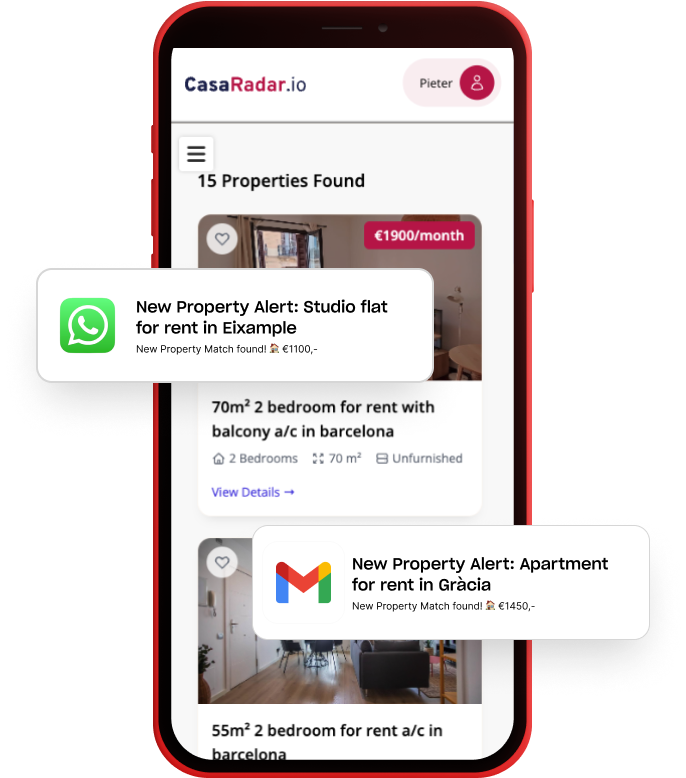
Where Rental House Listings Come to You
We track major and small real estate listing websites in Barcelona — so you don’t have to. Set your housing search criteria, and we’ll send you instant alerts the moment a new rental listing goes live that's fits your requirements.