

Everything You Need to Know About the NIE Number for Renting in Barcelona
You're excited about moving to Barcelona. You've found an apartment you love. Then the landlord asks: "¿Tienes NIE?"
If you don't know what a NIE is or why landlords ask for one, welcome to one of the most important bureaucratic items in Spanish housing.
Here's everything you need to know about NIE numbers for renting in Barcelona, including whether you actually need one and what to do if you can't get one.
What Is a NIE Number?
NIE stands for "Número de Identidad de Extranjero"—literally, "Foreigner Identification Number."
It's a nine-character identification number assigned by the Spanish government to non-Spanish citizens. The format is always: one letter + eight numbers + one letter (example: X1234567A).
Think of it as Spain's equivalent to a Social Security Number or tax ID number, but specifically for foreign nationals.
Who Needs a NIE?
- Non-EU citizens who plan to work, study, or stay in Spain long-term
- EU citizens who need to work or conduct business in Spain
- Anyone renting an apartment and signing a formal lease
- Anyone opening a bank account in Spain
- Anyone paying taxes in Spain
- Anyone needing to register with authorities (healthcare, utilities, etc.)
Who Doesn't Need a NIE (Usually)?
- EU citizens visiting for short-term tourism
- Anyone subletting informally for under 3 months
But even EU citizens renting formally often need one. It depends on the situation.
Why Do Barcelona Landlords Require a NIE?
This is important to understand: landlords ask for NIE numbers because of Spanish law, not because they're being difficult.
Here's the legal reality:
When you sign a formal rental contract in Spain, both parties have legal obligations. The landlord must:
- Register the contract with local authorities
- Report rental income to tax authorities
- Comply with tenant protection laws
To do any of this, the landlord needs your NIE. Without it, they technically can't legally register you as the tenant.
From the landlord's perspective:
- They need your NIE for tax purposes
- They're legally required to verify your identity
- Renting without proper documentation exposes them to fines
- They could lose the rental license or face liability issues
So when a landlord says "I need your NIE," they're usually not being unreasonable. They're following the law.
Exception: Some landlords accept informal subletting without contracts, which doesn't legally require a NIE. But formal, registered leases almost always require one.
How to Get a NIE Number (Step-by-Step)
The process for getting a NIE varies slightly depending on your citizenship and situation, but here's the general path:
For EU Citizens:
Step 1: Register at the Police Station
Go to your local police station (comisaría) with:
- Your passport
- A completed form (EX-15, available at the station or online)
- Proof of address in Barcelona (utility bill, rental contract, or bank statement)
- Completed form (sometimes they have these on site)
EU citizens can usually get a NIE appointment within 1-4 weeks.
Step 2: Wait for AppointmentThe police station will give you a date to return.
Step 3: Attend AppointmentBring the same documents. They'll process your NIE on the spot or within a few days.
Timeline: 2-8 weeks from first visit
Cost: Free
For Non-EU Citizens:
Non-EU citizens need a bit more. You typically need to get a NIE before coming to Spain (through a Spanish consulate in your home country) or apply upon arrival.
Option A: Apply at Your Home Country's Spanish Consulate (Recommended)
Documents needed:
- Passport
- Completed form (TIE, available from the consulate)
- Proof of purpose (job letter, student acceptance, family ties, etc.)
- Proof of economic means
- Sometimes: medical insurance proof, background check, or other documents
Timeline: 4-12 weeks
Cost: Usually €10-100 depending on country
Advantage: You arrive in Spain with your NIE already, making apartment hunting much easier.
Option B: Apply in Barcelona Upon Arrival
If you arrive without a NIE, you can apply at:
- Barcelona's National Police headquarters (Policía Nacional)
- The immigration office (Oficina de Extranjería)
Documents needed:
- Passport
- Completed form (EX-15 or TIE-15)
- Proof of address
- Proof of purpose (job contract, student letter, etc.)
- Sometimes: proof of funds or employment details
Timeline: 2-8 weeks from application
Cost: Free (though some documentation may cost fees)
Disadvantage: You're living in Barcelona without a NIE, making apartment hunting harder. Many landlords won't rent to you until you have one.
The Reality of Getting a NIE as an Expat
Here's what I'll be honest about: getting a NIE can be frustrating and bureaucratic.
The process requires:
- Visiting police or immigration offices (possibly multiple times)
- Waiting in queues
- Possibly not understanding Spanish
- Sometimes getting conflicting information
- Dealing with bureaucratic delays
Pro tips:
- Go early in the morning. Office hours are typically 8 AM-2 PM. Go at 8 AM to minimize wait times.
- Bring all documents. Seriously, over-prepare. You don't want to make a second trip.
- Get a letter from your employer. If you're working, having a signed letter from your employer stating your employment (in Spanish is better) helps. The letter should include:
- Your employment start date
- Your position
- Your salary
- The employer's contact information
- Use an gestoría (administrative assistant). For €50-200, a gestoría will handle the entire NIE process for you. This is worth it if you don't speak Spanish or are short on time. Search "gestoría NIE Barcelona" online.
- Check the specific requirements for your consulate. Requirements vary by country. Contact your home country's Spanish consulate before visiting.
Timeline: When You Should Apply
Ideal timeline:
- 8-12 weeks before moving: Apply at Spanish consulate in home country (if non-EU)
- 2-4 weeks before moving: If applying upon arrival in Barcelona, start the process immediately
- Upon arrival in Barcelona: If you couldn't apply earlier, go to Policía Nacional or Oficina de Extranjería on Day 1
Reality: Many people end up getting NIE numbers after arriving in Barcelona. It's not ideal for apartment hunting, but it's doable. You can mention to landlords that you have an appointment to get your NIE and provide the appointment confirmation.
Can You Rent Without a NIE? Alternatives and Workarounds
You'll read online that you can rent without a NIE. This is technically true in some limited situations, but it's complicated.
Scenario 1: Informal Subletting (Under 3 Months)
Some landlords allow short-term subletting without formal contracts or NIE numbers. You might see this on Airbnb-style platforms or through Facebook expat groups.
Pros:
- No NIE needed
- Quick process
Cons:
- Often more expensive
- Less legal protection for you
- Landlord might not be transparent about taxes
- Can't set up utilities or official residency
Is it a good idea? Only if you're visiting for 2-4 weeks. If you're staying 3+ months, get a NIE.
Scenario 2: EU Citizens Without NIE
Some landlords will accept EU citizens without a NIE, especially if you provide:
- Your passport
- An EU citizen declaration form
- Proof of address and employment
This is technically not following regulations, but some landlords do accept it.
Pros:
- Faster than getting NIE
- Still might get apartment
Cons:
- Landlord is technically breaking law
- You might lose protection if contract isn't registered
- Could affect tax and residency status
Is it a good idea? Better than nothing, but getting a NIE is still the right path.
Scenario 3: Corporate Housing
Some larger companies provide housing to employees. They sometimes handle NIE and registration internally.
Pros:
- Company handles bureaucracy
- Usually includes utilities and furniture
Cons:
- Limited availability
- Usually more expensive
- Only available if employed
Is it a good idea? Great if available, but you'll need a job first.
What if You Really Can't Get a NIE?
If you've genuinely tried to get a NIE and can't (rare, but it happens), your options are:
- Rent through an agency that specializes in foreign tenants. They sometimes navigate the legalities differently, though this is riskier.
- Ask the landlord if they'll accept an informal agreement with clear terms about duration, cost, and exit. This isn't ideal legally, but it's honest and transparent.
- Use corporate or furnished rental services that handle documentation differently.
- Keep trying for the NIE. Seriously. This is the official path.
NIE + Banking + Utilities: The Complete Setup
Once you have your NIE, you can:
Open a Bank AccountSpanish banks require NIE numbers for accounts. Popular banks for expats include:
- BBVA
- CaixaBank
- ING
- Sabadell
You'll need:
- NIE number
- Passport
- Proof of address (rental contract)
- Sometimes: initial deposit (usually €600+)
Set Up Utilities (Electricity, Gas, Water)Your landlord might include utilities in rent, or you'll need to set them up yourself.
Spanish utility companies:
- Electricity: Iberdrola, Endesa, Naturgy
- Gas: Caixabank, Naturgy, Endesa
- Water: SOREA (Barcelona's water company)
All require NIE numbers to register.
Register for HealthcareYour NIE allows you to register with a local doctor (médico de cabecera) at a public health center (centro de salud). Healthcare is free if you're legally resident.
Important: NIE vs. Residency Card (TIE)
These are different things, and it's important to know the distinction:
NIE (Número de Identidad de Extranjero)
- The identification number
- Nine characters (letter + 8 numbers + letter)
- Assigned when you're first registered with authorities
- Sometimes physical card, sometimes just a number
TIE (Tarjeta de Identidad de Extranjero)
- A physical identification card
- Required for non-EU citizens staying long-term (over 90 days)
- EU citizens usually don't get TIE cards
- Contains your NIE and biometric information
For renting: You need the NIE number. Most landlords just ask for the number, not the physical card.
Red Flags: When NIE Requirements Are Suspicious
Most landlords asking for NIE are legitimate. But watch for:
Red Flag 1: Landlord asks for NIE before video tour or contract
Legitimate landlords confirm you're real (video call) and show the apartment before discussing NIE.
Red Flag 2: Landlord demands money before you have NIE
Never pay before having a contract and NIE. This is either a scam or illegal.
Red Flag 3: Landlord wants NIE but no other documentation
A legitimate contract includes both NIE and signed lease terms.
If any of these happen, see our guide on how to avoid rental scams in Barcelona.
Timeline Summary: The Realistic Path
Months 0-2 before moving:
- If non-EU: Apply for NIE at Spanish consulate in your home country
- If EU: Plan to apply in Barcelona upon arrival
Month 2-1 before moving:
- Start searching for apartments on platforms like CasaRadar (you can explain your NIE status to interested landlords)
After arrival:
- If you don't have NIE yet: Go to Policía Nacional or Oficina de Extranjería immediately
- Expect 2-4 weeks for appointment and processing
After getting NIE:
- Sign lease with landlord
- Register lease with local authorities
- Open bank account
- Set up utilities
- Register for healthcare
Key Takeaway
The NIE number is not optional if you're renting formally in Barcelona. It's required by law. Getting one takes 2-8 weeks depending on your situation and whether you apply before or after arriving.
Best practice: If you know you're moving to Barcelona:
- Non-EU citizens: Apply at consulate 8-10 weeks before moving
- EU citizens: Plan to apply within first week of arrival
- Both: Mention your NIE status to landlords honestly; most will wait for you to get one if you're serious
Yes, the process is bureaucratic and sometimes frustrating. But it's the foundation for legally renting, working, and living in Barcelona.
And once you have it? Everything else—bank accounts, utilities, residency, healthcare—becomes much easier.
Need help finding apartments while you're dealing with the NIE process? CasaRadar alerts work regardless of your NIE status—you can identify apartments, reach out to landlords, and explain your timeline. By the time you have your NIE, you'll already have options waiting.
Good luck with your NIE application. You've got this.

Ready to Find Your Rental Place in Barcelona?
Frequently asked questions about the NIE number for renting in Barcelona
Here are answers to some of the most common questions we receive.
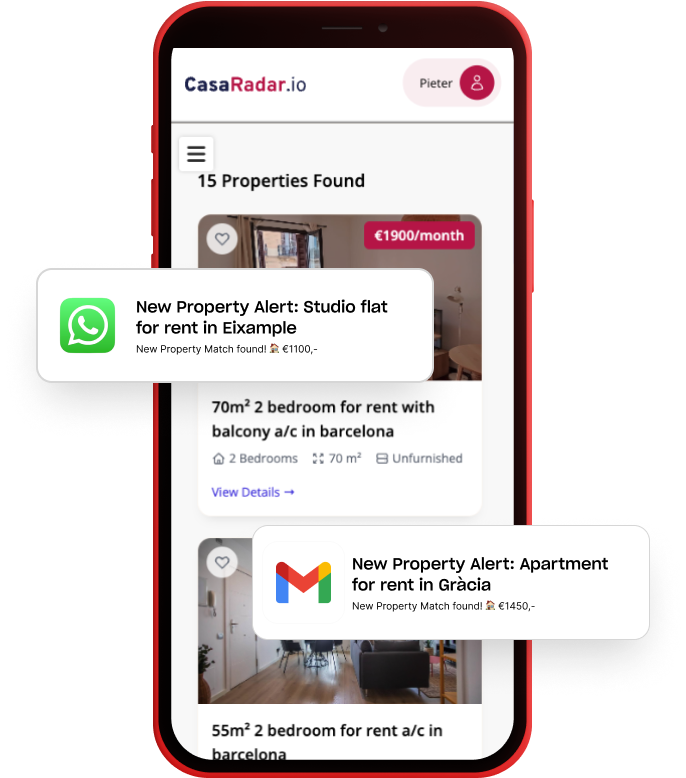
Where Rental House Listings Come to You
We track major and small real estate listing websites in Barcelona — so you don’t have to. Set your housing search criteria, and we’ll send you instant alerts the moment a new rental listing goes live that's fits your requirements.