

Barcelona Long-Term Rentals: Deposits, Contracts, and Everything You Need to Know
Barcelona Long-Term Rentals: Deposits, Contracts, and Everything You Need to Know
Barcelona's long-term rental market is protected by LAU (Ley de Arrendamientos Urbanos), Spain's strongest tenant law. A long-term lease means 12+ months of "vivienda habitual" (primary residence) status, with automatic rights to 5–7 year minimum protection, capped rent increases, and nearly impossible non-renewal. Deposits are legally limited to one month's rent, and your landlord cannot evict you without court order. If you're settling in Barcelona for a year or more, understanding LAU protections, contract clauses, and your responsibilities ensures you avoid scams, overpayment, and illegitimate evictions.
What Qualifies as a Long-Term Rental?
How does Barcelona legally define "long-term"?
In Barcelona rental law, long-term means 12 or more months of continuous occupancy as your primary residence (vivienda habitual). This triggers LAU protections automatically.
Legal threshold:
- Minimum duration: 12 consecutive months
- Status: You must establish it as your primary residence (domicilio habitual)
- Documentation: Lease agreement specifically labels it "vivienda habitual" or "alquiler de vivienda" (residential lease)
How LAU applies:
- Individual landlord: Automatically offers minimum 3 years, extendable for 2 more years (5 total)
- Company/institutional landlord: Automatically offers minimum 5 years, extendable for 2 more years (7 total)
- Your right to extend: After initial period, you can renew for additional years at terms you negotiate (landlord can't refuse without cause)
Contrast: Short-term vs. long-term
- Stays under 12 months fall under temporary contracts (contrato temporal), with minimal protections
- See our guide on short-term-rentals-barcelona-legal for mid-term options
Understanding LAU: Your Legal Protections
What does LAU law actually protect me from as a tenant?
LAU (Spanish Residential Leases Law) is one of Europe's strongest tenant protection frameworks. Here's what you're guaranteed:
1. Minimum Lease Duration
- Individual landlord: 3 years minimum (automatically; can't be waived)
- Company landlord: 5 years minimum (automatically; can't be waived)
- After the initial period, you have first right to renewal
2. Rent Increase Limits
- Annual increases capped at Spanish reference index (Índice de Referencia de Rents — IRR)
- 2025-2026: IRR = 2.87% (set by government; changes yearly)
- Landlord cannot increase above this percentage per year
- Increases must be applied on anniversary date, with 30-day notice
3. Deposit Protection
- Legal maximum: 1 month's rent (for residential leases)
- Must be held by third party (bank account or registered deposit holder)
- Interest accrues to tenant
- Must be returned within 30 days of lease end (minus documented damages)
4. Non-Eviction Protection
- Landlord cannot evict you for wanting to stay (non-renewal)
- Can only evict for: non-payment, lease violation, or personal use (if the property is their primary residence—rare)
- Even for these reasons, must go through court; you have legal defense rights
5. Habitability Rights
- Apartment must be safe (no moisture, mold, structural damage)
- All utilities must function (water, electricity, heating)
- Landlord responsible for repairs (tenant not liable for normal wear)
6. Privacy & Quiet Enjoyment
- Landlord cannot enter without 24-48 hours notice (varies by region)
- Cannot enter for inspections more than once per year
- Cannot harass or interfere with your occupation
Deposit Rules in Barcelona
How much deposit can a landlord legally ask for?
Legal deposit rules:
- Rule: Maximum amount — Details: 1 month's rent (for residential leases under LAU)
- Rule: Must be registered — Details: Held by neutral third party (official deposit holder, bank account, notary)
- Rule: Interest — Details: Accrues to tenant (landlord cannot keep interest)
- Rule: Return timeline — Details: Within 30 days of lease end
- Rule: Deductions — Details: Only for documented damages beyond normal wear; landlord must provide itemized list with photos/quotes
- Rule: Dispute process — Details: If withheld unfairly, you can file complaint with rental authority or small claims court
What counts as "normal wear":
- Light scuffs on walls
- Faded paint/flooring
- Minor carpet wear
- General aging
What landlord can deduct from deposit:
- Holes in walls (not nail holes)
- Broken windows/doors
- Stains/damage beyond wear
- Deep cleaning costs (only if lease explicitly required it)
Red flags:
- Landlord asking for 2+ months deposit (illegal)
- Cash deposit with no receipt or registration (completely unprotected)
- Landlord saying "I'll return it after I show the apartment" (should be within 30 days, no conditions)
The Lease Signing Process: Step by Step
How does signing a long-term Barcelona lease work?
Step 1: Finding & Viewing
- Browse CasaRadar for verified listings with full details
- View apartment in person (or video if remote)
- Confirm building condition, neighborhood, utilities included
Step 2: Making an Offer
- Negotiate price, move-in date, contract length
- Landlord may ask for proof of income (3 months payslips) or employment letter
- Agree on furnished vs. unfurnished status
Step 3: Draft Contract
- Landlord or estate agent provides contract (usually in Spanish, often available in English translation)
- Key clauses to verify:
- Rent amount and payment method (usually bank transfer)
- Utility inclusion (electricity, water, gas, internet—clarify who pays)
- Deposit amount and holder (must be 1 month max, registered)
- Lease period (must include 12+ months for LAU protections)
- Move-in and end dates
- Renewal/prórroga terms (usually automatic unless landlord objects)
- Maintenance responsibilities (landlord vs. tenant)
- Penalty clauses (for early termination, typically 1-2 months)
Step 4: Review Before Signing
- Have contract reviewed by tenant rights group or lawyer (many offer free consultations)
- Clarify any vague language
- Request changes if terms conflict with LAU protections
Step 5: Register Deposit
- Ensure deposit goes to registered third party (not landlord's personal account)
- Get receipt with deposit holder's name, amount, and registration number
- Keep this document—you'll need it to recover deposit
Step 6: Sign & Provide Documents
- Sign both copies (you and landlord each get one)
- Provide identification (DNI/NIE/passport)
- Landlord may request proof of income, employment letter, references
- Submit lease to tax authority (Agencia Tributaria) for registration if notarized
Step 7: Move-In Inspection
- Walk through apartment with landlord/agent
- Document existing damage with photos/video
- Sign move-in report (estado de conservación) listing damage before you moved in
- This protects you from deposit deductions for pre-existing damage
Step 8: Establish Residency
- Register with local police (empadronamiento) at your district office (Juzgado)
- Costs about €15; required for: tax residency, healthcare access, voting
- Takes 10-15 minutes
Rent Increases & Rights During the Lease
How much can my landlord raise rent each year?
The IRR rule:
- Rent increases tied to Spanish IRR (Índice de Referencia de Rents)
- Each year it's set by government; 2025-2026 = 2.87%
- Landlord can increase by up to IRR amount yearly
- Cannot increase more than once per year (on anniversary date)
- Landlord must notify 30 days before increase takes effect
Example:
- Year 1 rent: €800/month
- Year 2 increase: 2.87% = €822.96/month
- Year 3 increase: 2.87% (applied to €822.96, not original €800)
Your protection:
- You can see IRR published officially on government website
- If landlord asks for more than IRR, it's illegal (refuse & report)
- Rent cannot jump mid-lease unless contract explicitly allows negotiation
Negotiation:
- If IRR increases significantly, you might negotiate fixed increase below IRR
- Many landlords accept lower increase for tenant stability (better than turnover)
- Always negotiate before renewal (prórroga) period
Prórroga: Lease Renewal & Extension
What happens when my lease ends? Do I have to leave?
Automatic renewal (prórroga):
- LAU leases automatically renew unless landlord objects
- First renewal: automatic (you don't have to do anything)
- Subsequent renewals: automatic unless landlord gives 60-day notice of non-renewal
Landlord's right to non-renew:
- Landlord can decline to renew, but only with 60 days' written notice
- Notice must arrive before lease expires
- Landlord must give valid reason (personal use, structural renovation, eviction)
- Cannot simply say "I want you out" without cause
Your right to renew:
- You can request renewal in writing 30-60 days before expiration
- Landlord can accept, negotiate new terms, or refuse (with cause)
- If refused, landlord must explain reason and follow legal process
Extension negotiation:
- If lease is 3 years, you can negotiate to extend another 2, 5, or 10 years
- Rent can be renegotiated (often 2-5% increase is standard market practice)
- Extensions should be in writing as lease addendum
Timeline example (3-year individual landlord lease):
- Month 1: Lease begins
- Month 33-35: Landlord gives 60-day non-renewal notice (or stays silent = auto-renewal)
- Month 36: Original lease ends
- Month 36+: You either renew, renegotiate new terms, or must move out
Early Termination: Breaking a Long-Term Lease
Can I break my lease early? What are the consequences?
The challenge:
- Barcelona law strongly favors tenants in staying but less so in leaving early
- Landlord can enforce penalty clauses if you terminate early
Standard terms:
- Before 6 months: You owe full rent through month 6 (no escape)
- After 6 months, with notice: 30–60 days notice typical + 1–2 months penalty
- Example: Leave in month 7 with 60 days notice = owe month 7 + month 8 penalty
Negotiating early exit:
- Request written amendment to lease allowing early termination
- Offer: 60-day notice + 1 month penalty (or negotiated amount)
- Ask landlord to help find replacement tenant (reduces their loss)
- Document agreement in writing, signed by both parties
Legitimate reasons (sometimes forgiven):
- Job relocation with documentation
- Health emergency with doctor's note
- Family emergency
- Landlords may waive penalty if reason is sympathetic & documented
What happens if you just leave:
- Landlord can pursue legal action
- You owe rent through notice period + penalty
- Eviction/court judgment damages your credit
- Landlord reports to debt collection agencies
Better alternatives:
- Sublet your apartment (some leases allow; negotiate with landlord)
- Find replacement tenant yourself (landlord's goodwill helps)
- Use CasaRadar's apartment swap feature to find exchange tenants
Maintenance: Who's Responsible for What?
Is the landlord or tenant responsible for repairs?
LAU rules are clear:
- Issue: Structural repairs — Landlord Responsibility: Yes (cracks, roof leaks, foundation) — Tenant Responsibility: No
- Issue: Major systems — Landlord Responsibility: Yes (plumbing, electrical, heating, hot water) — Tenant Responsibility: No
- Issue: Appliances (if included) — Landlord Responsibility: Yes (fridge, stove, washer—if in lease) — Tenant Responsibility: No (normal use only)
- Issue: Light bulbs, batteries — Landlord Responsibility: No — Tenant Responsibility: Yes (minor items)
- Issue: Cosmetic touch-ups — Landlord Responsibility: No — Tenant Responsibility: Yes (paint scuffs, small cracks)
- Issue: Cleaning (move-out) — Landlord Responsibility: No — Tenant Responsibility: Yes (must return clean)
- Issue: Garden/outdoor areas — Landlord Responsibility: Yes — Tenant Responsibility: Only maintain if specified in lease
- Issue: Damage from tenant negligence — Landlord Responsibility: No — Tenant Responsibility: Yes (intentional damage, misuse)
- Issue: Normal wear & tear — Landlord Responsibility: Landlord covers in deposit — Tenant Responsibility: Not deductible
Process for repairs:
- Report in writing (email + photo) to landlord immediately
- Set 7-day deadline for repair (legal requirement)
- If landlord delays, tenant can:
- Hire contractor, send invoice to landlord (deduct from rent)
- Report to municipal housing authority
- Reduce rent by repair percentage (must document)
What you should NOT do:
- Make repairs without landlord permission
- Deduct from rent without documented communication
- Leave repairs for move-out
Furnished vs. Unfurnished Long-Term Rentals
What's the difference between furnished and unfurnished apartments in Barcelona?
Unfurnished (piso sin amueblar) — Most common long-term
- What's included: Walls, doors, windows, kitchen (cabinets only, no appliances)
- Utilities: Usually not included; you contract directly
- Cost range: €600–€1,800/month (depending on location, size)
- Best for: Professionals, families, long-term expats
- Tenants often buy/furnish: Bed, sofa, table, chairs, appliances
- Move-out: Remove your furniture; return to bare walls
Furnished (piso amueblado) — Shorter-term oriented
- What's included: All furniture, some appliances, often internet/utilities
- Utilities: Usually included in rent
- Cost range: €800–€2,200/month (premium for convenience)
- Best for: Short-stays, students, people in transition
- Move-in time: Shorter (no need to buy furniture)
- Move-out: Just leave furnished items
Legal nuance:
- LAU protections apply to both furnished and unfurnished
- Furnished often contracts as "residential" not "tourist" (avoiding short-term loopholes)
- Some furnished places try to use "tourist" designation illegally (avoid these)
For long-term planning:
- 0–6 months: Furnished with utilities included (convenience worth premium)
- 6–24 months: Furnished or unfurnished (balance flexibility with savings)
- 24+ months: Unfurnished (long-term savings, ability to personalize)
What Happens at End of Lease
How does the move-out process work?
30-60 days before lease ends:
- Confirm with landlord whether you're renewing or moving out
- If moving out, give written notice (even if lease is ending)
Week before move-out:
- Schedule final inspection with landlord (estado de conservación final)
- Both parties walk through, document any damage
- Take photos/video of move-out condition
Move-out day:
- Remove all your belongings
- Return keys to landlord/agent
- Ensure utilities are off (water, gas, electricity switches)
- Leave apartment clean (sweep, basic cleaning expected)
Deposit return:
- Landlord has 30 days to return deposit (minus deductions)
- If deductions: landlord provides itemized list, photos, repair quotes
- Dispute deductions in writing within 10 days if unfair
- If withheld illegally, file complaint with rental authority or court
Residency cancellation:
- Visit local police (Juzgado) to cancel empadronamiento registration
- Takes 10 minutes, free
- Prevents being liable for local taxes at old address
Utilities cancellation:
- Contact electricity (endesa.es), water (Agbar), gas (Gas Natural) companies
- Provide move-out date
- Final reading/bill sent to your address
Common Lease Clauses Explained
What do these standard lease terms mean?
Renta/Rent
- Monthly amount due, payment method (usually bank transfer on specific date)
- Non-negotiable once signed unless both parties agree to amendment
Período de vigencia (Contract period)
- Must be 12+ months minimum to trigger LAU protections
- Typically 1 year, 3 years, or 5 years (3-year is most common)
- Longer terms = more security for landlord, better negotiating power for tenant
Caución (Deposit)
- Amount held by third party (usually 1 month's rent)
- Must specify who holds it and how it's registered
- Cannot exceed 1 month for residential leases
Prórroga (Renewal)
- Auto-renewal clause (stays active after initial period unless 60-day notice)
- Some contracts say "will renew unless landlord objects"
- Your right to stay is protected unless landlord gives valid cause
Gastos de comunidad (Building maintenance fees)
- Often included in rent, sometimes separate
- If separate, clarify who pays (usually tenant)
- Can increase slightly yearly (ask what's typical)
Mascotas (Pets)
- Lease may allow, restrict, or prohibit pets
- Common clauses: "No pets" or "Pets allowed with €300 deposit"
- Negotiate if you have a pet (many landlords accept for slightly higher rent)
Usos permitidos (Permitted uses)
- Lease should specify "residential use" only
- Prohibits commercial use (working office, Airbnb sublets)
- Violating this is grounds for eviction
Penalización por rescisión (Early termination penalty)
- Usually 1–2 months rent if you leave before 6 months
- After 6 months: reduced penalty (30–45 days notice + reduced fee)
- Negotiate to lower this before signing
Common Mistakes to Avoid
What landlord tricks or lease traps should I watch for?
1. Blank clauses or verbal agreements
- Never sign contracts with blank spaces (fill them in first)
- Always get verbal agreements in writing as addendum
- "I'll give you a copy later" = red flag (get it before signing)
2. Asking for extra deposits or "guarantees"
- Legal maximum: 1 month's rent
- Any request for 2+ months or "guarantee from employer" = illegal
- Report to rental authority if coerced
3. Not registering the deposit
- Insist deposit goes to registered third party
- Get deposit holder's name and registration number
- If held in landlord's account: go to court to recover
4. "Tourist" labeling to avoid LAU
- Some landlords try to call 12-month leases "tourist" to escape LAU
- If lease says "residential" or "vivienda habitual," you're protected (their label doesn't matter)
- Get legal advice if unsure
5. Utilities "not included"—but suddenly monthly costs are vague
- Lock in exact amounts for utilities in writing
- Ask what's included: electricity, water, gas, internet, building fees
- Get utilities in your name so landlord can't threaten shutoff
6. "You can't register empadronamiento"
- Landlord claiming you can't register residency = illegal
- Empadronamiento is your right; register anyway
- Protects you from tax liability, enables healthcare access
7. Pressure to sign immediately
- Reputable landlords wait while you review
- Never sign same day as viewing unless you've had 24 hours to read
- Rush = higher risk of unfavorable terms
Resolving Disputes Without Court
What should I do if the landlord violates the lease?
Document everything:
- Emails, text messages, photos, repair logs
- Send all requests in writing (avoid phone-only conversations)
Common disputes & solutions:
1. Non-payment of rent
- Landlord can pursue legal eviction (can happen, but rare)
- You have court defense right
- Pay immediately if there's been confusion
- If dispute: use notary to formally document your payment
2. Repair issues
- Report in writing with 7-day deadline
- If landlord ignores: hire contractor, document cost, deduct from rent
- Send written notice before deducting
- Keep receipts; landlord must reimburse or dispute goes to court
3. Deposit withholding
- Request itemized deduction list within 30 days of move-out
- If no response: demand return in writing (2-week deadline)
- If still withheld: file complaint with rental authority or small claims court
4. Harassment or illegal entry
- Document: dates, times, what happened
- Inform landlord in writing that entry requires notice
- Report to police (Mossos d'Esquadra) if trespassing occurs
- Contact tenant rights organization for support
Free resources in Barcelona:
- Organitzacions de Llogaters (Tenant's unions): Free legal consultations
- Juzgados de lo Social (Social courts): Free small claims process for disputes under €600
- Ajuntament Barcelona: Housing office mediation services

Ready to Find Your Rental Place in Barcelona?
Frequently Asked Questions About Long-Term Rentals in Barcelona
Here are answers to some of the most common questions we receive.
What's the minimum lease length required in Barcelona?
12 months to trigger LAU protections. Shorter contracts are possible but don't include minimum duration guarantees or rent increase limits. Always negotiate for 12+ months if settling long-term.
Can a landlord refuse to renew my lease after 3 years?
With 60 days' written notice, yes—but only if they state valid cause (personal residence use, structural renovation, legal eviction). They cannot refuse arbitrarily. You have court recourse if they're lying about cause.
Is the deposit refundable, or can the landlord keep it?
Fully refundable within 30 days of move-out, minus documented damages (with itemized list, photos, quotes). If withheld unfairly, file a court complaint. Most deposits are returned in full.
How much can my rent increase each year?
Capped at Spanish IRR (Índice de Referencia de Rents), set yearly by government. For 2025-2026, it's 2.87%. Cannot increase more than once yearly, on your anniversary date, with 30 days' notice.
Can I sublet my apartment while keeping my lease?
Only if your lease explicitly allows subletting. If it doesn't, landlord can approve in writing. Subletting without consent is lease violation (grounds for eviction). Always get written permission first.
What happens if I need to leave before my 3-year lease ends?
You owe penalty (typically 1–2 months rent) for early termination. After 6 months, penalty is usually reduced. Negotiate with landlord or find replacement tenant to waive penalty.
Do I have to register with the police (empadronamiento) for a long-term lease?
Yes, it's required and protects you legally. Visit local Juzgado, costs €15, takes 15 minutes. Establishes you as resident (enables healthcare, voting, tax residency). ---
Where Rental House Listings Come to You
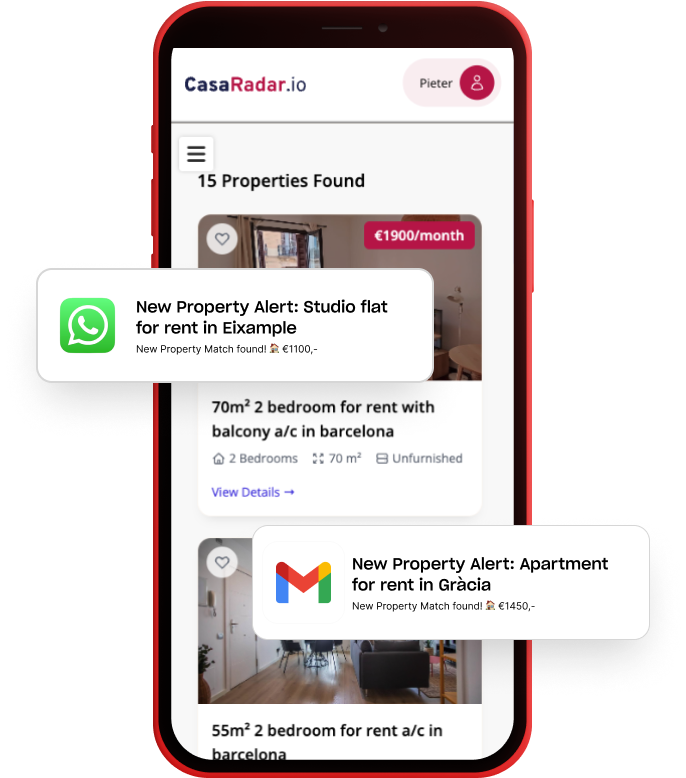
We track major and small real estate listing websites in Barcelona — so you don’t have to. Set your housing search criteria, and we’ll send you instant alerts the moment a new rental listing goes live that's fits your requirements.