

Best Neighborhoods to Rent in Barcelona: Complete 2026 Breakdown
Barcelona's best neighborhoods for renters in 2026 depend on your budget and lifestyle. Eixample suits expats seeking central access and nightlife (€1,100-1,600/month); Gràcia appeals to bohemians wanting village vibes (€900-1,400); Poblenou attracts digital nomads and creatives (€1,000-1,500); while budget-conscious renters thrive in Sants or Poble Sec (€800-1,300).
Finding the perfect neighborhood in Barcelona can feel overwhelming—there are 10 major districts, each with wildly different vibes, prices, and transport links. This guide breaks down exactly where you should live based on your lifestyle, budget, and priorities. Whether you're an expat landing in Barcelona for a corporate job, a student stretching every euro, or a digital nomad seeking creative energy, we'll help you find your neighborhood.
1. Eixample — The Expat Classic & Urban Heart
The Vibe
Eixample is Barcelona's most popular expat neighborhood, and for good reason. Designed by Ildefons Cerdà in the 1860s, it features a perfect grid of wide avenues, tree-lined paseos, and stunning modernist buildings. The neighborhood feels quintessentially Barcelona—sophisticated but not pretentious, with excellent restaurants, galleries, and nightlife. You'll find both the upscale Dreta (right side) and the edgier Esquerra (left side), each with distinct personalities.
Rent Prices
- 1-bedroom apartment: €1,100–€1,600/month
- Studio: €800–€1,200/month
- 2-bedroom: €1,400–€2,100/month
- Shared room: €550–€800/month
Furnished apartments cost 15–20% more.
Pros
- Best metro connectivity (Lines 2, 3, 4, 5 all cross Eixample)
- Most restaurants, bars, and nightlife in the city
- Close to Gaudí's Sagrada Familia and Passeig de Gràcia shopping
- Safe, walkable, and very international
- Excellent for meeting other expats and finding English-speaking services
- Plenty of coworking spaces for remote workers
Cons
- Most expensive neighborhood (outside Sarrià-Sant Gervasi)
- Can feel touristy in parts, especially near Sagrada Familia
- Noise from bars and nightlife (especially weekend evenings)
- Smaller apartments compared to outer neighborhoods
- Agency fees and landlord pickiness (highest demand = stricter tenants)
Best For
Corporate expats, young professionals, remote workers seeking nightlife and central location, students with larger budgets
Transport Connections
- Metro: Lines L2 (red), L3 (green), L4 (yellow), L5 (blue) run through Eixample
- Buses: Extensive network (lines 6, 7, 9, 33, 34, and many more)
- Tram: T-Lite trams connect to Poblenou and other areas
- To airport: ~30 mins via Metro Line 3 + Line 9 to T1/T2
2. Gràcia — Bohemian Village Vibes
The Vibe
Gràcia is where you go when you want to feel like you've left Barcelona but you're only 10 minutes from downtown. This neighborhood—technically its own district before annexation in 1897—retains a small-town, village atmosphere. Narrow pedestrian streets, local plazas (plaçes), independent shops, and quirky cafes create an artsy, bohemian energy. It's popular with artists, musicians, students, and anyone seeking alternatives to corporate Barcelona.
Rent Prices
- 1-bedroom apartment: €900–€1,400/month
- Studio: €700–€1,000/month
- 2-bedroom: €1,200–€1,800/month
- Shared room: €450–€700/month
Pros
- Much cheaper than Eixample (10–20% less)
- Strong community feel and tight-knit neighborhood vibe
- Independent shops, galleries, vintage stores, and organic cafes
- Multiple plazas with outdoor seating and street culture
- Excellent for meeting locals and expats in a non-corporate setting
- Good metro access (Line 3) despite village feel
- Great nightlife without the tourist crowds
Cons
- Fewer international schools and English-language services
- Smaller metro network compared to Eixample (primarily Line 3)
- More student-focused, so less polished than Eixample
- Can feel gentrified in some pockets; rapid change affecting community
- Fewer luxury apartments and more shared flats
- Narrower streets = less sunlight in some apartments
Best For
Artists, creatives, students, bohemian expats, anyone seeking community over convenience, digital nomads wanting authenticity
Transport Connections
- Metro: Line L3 (green) runs through Gràcia (Lesseps, Fontana, Diagonal stations)
- Buses: 6, 7, 32, 87, and others connect to Eixample and beyond
- Funicular: Rack railway (Funicular de Vallvidrera) connects to nearby hills
- To airport: ~40 mins via Metro Line 3
3. Poblenou — The Digital Nomad Hub & Creative Neighborhood
The Vibe
Poblenou, once Barcelona's industrial heart, has transformed into a creative powerhouse. Known as "Barcelona's Brooklyn," this neighborhood attracts startups, tech workers, designers, and digital nomads. The Rambla del Poblenou—a tree-lined pedestrian avenue—is lined with cafes, coworking spaces, and young professionals on laptops. Beach access is 10 minutes away, and the energy balances urban cool with laid-back Mediterranean vibes.
Rent Prices
- 1-bedroom apartment: €1,000–€1,500/month
- Studio: €750–€1,100/month
- 2-bedroom: €1,300–€1,900/month
- Shared room: €500–€750/month
Pros
- Perfect for digital nomads and remote workers (abundant coworking spaces)
- Closest residential neighborhood to Barcelona Beach (10-minute walk)
- Thriving startup and creative community
- Excellent restaurants, beer bars, and weekend brunch culture
- Lower prices than Eixample, higher energy than Gràcia
- Rapidly improving metro access
- Great for meeting other international professionals
Cons
- Still gentrifying; some areas feel underdeveloped
- Metro access less extensive than Eixample (primarily Line 4)
- Fewer luxury apartments; mostly renovated lofts and modern builds
- Can be noisy during summer (beach season, parties)
- Further from city center museums and attractions
- Less established neighborhood feel; still finding its identity
Best For
Digital nomads, freelancers, startup employees, creative professionals, young expats, anyone seeking beach + city lifestyle, remote workers
Transport Connections
- Metro: Line L4 (yellow) – Poblenou, Llacuna, Mar stations
- Buses: 6, 36, 40, 41, and others
- Beach access: 10-minute walk to Bogatell or Mar Bella beaches
- To airport: ~35 mins via Metro Line 4
4. El Born / La Ribera — Trendy, Central & Young Professional Haven
The Vibe
El Born (also called Ribera) is Barcelona's most Instagram-worthy neighborhood. Medieval Gothic Quarter charm meets cutting-edge restaurants, wine bars, and contemporary galleries. Passeig del Born is an elegant tree-lined promenade where everyone hangs out; surrounding streets feature 14th-century palaces turned into restaurants and boutiques. It's central, walkable, and attracts young professionals and affluent expats. Fair warning: it can feel touristy, especially along the main streets.
Rent Prices
- 1-bedroom apartment: €1,100–€1,600/month
- Studio: €850–€1,200/month
- 2-bedroom: €1,400–€2,100/month
- Shared room: €550–€800/month
Pros
- Extremely walkable to Gothic Quarter, Port Vell, waterfront
- Excellent restaurants and bars for every budget
- Beautiful medieval streets and architecture
- Central location with multiple metro lines (L4, Metro del Port)
- Safe neighborhood with heavy foot traffic
- Perfect for exploring Barcelona on foot
- Strong expat community and English-friendly services
Cons
- Second most expensive neighborhood (comparable to Eixample)
- Heavy tourist foot traffic, especially weekends
- Smaller, more expensive apartments
- Noisy at night (lots of bars and nightlife)
- Less residential feel; more commercial
- Fewer parks and green spaces
- Can feel crowded and touristy
Best For
Young professionals, affluent expats, anyone prioritizing location and walkability, students with higher budgets, culture enthusiasts
Transport Connections
- Metro: Line L4 (yellow) – Jaume I station, Arc de Triomf
- Buses: Extensive network (14, 17, 22, 36, and more)
- Walking: Everything is walkable to Gothic Quarter, Waterfront
- To airport: ~25 mins via Metro Line 4
5. Sants — Affordable, Well-Connected, & Real Barcelona
The Vibe
Sants is where actual Barcelonans live, not tourists. This working-class neighborhood south of Eixample is authentic, affordable, and well-connected by metro. You'll find local markets, family-run restaurants, corner bars, and a genuine Spanish vibe. It lacks the trendy cache of Eixample or Gràcia, but that's precisely why it offers better value. The neighborhood has been gentrifying slowly, attracting expats seeking authenticity over trendiness.
Rent Prices
- 1-bedroom apartment: €800–€1,200/month
- Studio: €650–€900/month
- 2-bedroom: €1,100–€1,600/month
- Shared room: €400–€600/month
Pros
- 20–30% cheaper than Eixample and Gràcia
- Excellent metro connectivity (Lines 2, 5)
- Close to Sants train station (major transport hub, airport trains)
- Local markets (Mercat de Sants) for authentic shopping
- Safe, quiet, family-friendly
- Genuine Spanish/Catalan neighborhood feel
- Great value for students and budget-conscious expats
- Good bar scene and pintxo restaurants
Cons
- Less touristy = fewer English-language services
- Less nightlife and upscale dining than Eixample/Gràcia
- Can feel less "Barcelona" if you're seeking creative energy
- Fewer parks and green spaces
- Less walkable than central neighborhoods
- Smaller expat community, more local
- Fewer coworking spaces and startup community
Best For
Budget-conscious students, expats seeking authentic Barcelona life, remote workers not requiring constant nightlife, families, anyone valuing affordability over trendiness
Transport Connections
- Metro: Lines L2 (red), L5 (blue)
- Buses: Extensive network
- Train: Sants train station (AVE and regional trains, airport express T9)
- To airport: ~20 mins via T9 express train from Sants station
6. Poble Sec — Up-and-Coming, Affordable & Foodie Paradise
The Vibe
Poble Sec sits on a hill overlooking the port, with stunning views of Barcelona's waterfront. Long overlooked, it's rapidly transforming into a food and culture destination. Blai Street is lined with tapas bars, natural wine shops, and young restaurants. The neighborhood combines affordable rents with authentic local character, appealing to expats wanting better value than Eixample without sacrificing walkability.
Rent Prices
- 1-bedroom apartment: €850–€1,300/month
- Studio: €700–€950/month
- 2-bedroom: €1,150–€1,700/month
- Shared room: €450–€650/month
Pros
- 15–25% cheaper than Eixample; strong value
- Blai Street is Barcelona's hottest dining destination
- Stunning port and city views from the hill
- Walkable to Eixample and Gothic Quarter
- Rapidly improving neighborhood infrastructure
- Younger, more bohemian vibe emerging
- Good metro access (Lines 2, 3)
- Close to MNAC museum and Montjuïc attractions
Cons
- Still gentrifying; not fully established neighborhood
- Fewer parks and green spaces (on a hill = fewer trees)
- Less international/expat infrastructure than Eixample
- Fewer coworking spaces
- Can be noisy from bar scene on Blai
- Less walkable to beach than Poblenou or other areas
- Fewer shared apartments (more family rentals)
Best For
Foodies, creative expats, culture enthusiasts, young professionals valuing food scene, anyone seeking emerging neighborhood with good value, travelers wanting authentic experiences
Transport Connections
- Metro: Lines L2 (red), L3 (green) – Paral·lel station
- Buses: Extensive network (20, 24, 157, and others)
- Funicular: Up the hill to Montjuïc
- To airport: ~35 mins via Metro Line 2
7. Les Corts — Quiet, Green & Family-Friendly
The Vibe
Les Corts is Barcelona's quiet, leafy alternative. Located west of Eixample, it's home to Camp Nou (FC Barcelona stadium) and attracts families, older expats, and anyone seeking peaceful residential living. Wide tree-lined avenues, parks, and a suburban feel make it feel less "Barcelona" and more like a calm European neighborhood. It's perfect if you want to escape the intensity of central Barcelona but maintain good metro access.
Rent Prices
- 1-bedroom apartment: €900–€1,300/month
- Studio: €700–€950/month
- 2-bedroom: €1,200–€1,700/month
- Shared room: €450–€650/month
Pros
- Peaceful, green, family-friendly atmosphere
- Good metro access (Lines 3, 5, FGC trains)
- Close to Camp Nou stadium and FC Barcelona
- More space for your money than Eixample
- Better walkability within neighborhood than outer areas
- Parks and green spaces (Parc de l'Espanya Industrial, Joan Miró Park)
- Quieter evenings, good for those seeking calm
Cons
- Less nightlife and restaurant density than central neighborhoods
- Fewer coworking spaces and startup culture
- Can feel suburban/boring for young singles seeking social scene
- Less walkable to city center attractions
- Fewer cultural activities compared to Eixample/Gràcia
- More family-oriented, less exciting for party crowd
- Smaller expat community in some pockets
Best For
Families, older expats, quiet seekers, FC Barcelona fans, remote workers wanting a calm home base, anyone prioritizing peace over nightlife
Transport Connections
- Metro: Lines L3 (green), L5 (blue), FGC trains
- Buses: Good coverage (6, 7, 14, 33, 34, and others)
- To airport: ~40 mins via Metro and connections
8. Sarrià-Sant Gervasi — Upscale, Green & Spacious
The Vibe
Sarrià-Sant Gervasi is Barcelona's upscale residential district, stretching across the northern hills. Split between working-class Sarrià village (charming, narrow streets) and affluent Sant Gervasi (wide avenues, large apartments), this neighborhood feels like a different city. It's green, spacious, quiet, and attracts affluent expats, retirees, and executives. You'll find larger apartments, gardens, and a calm European vibe. However, it's pricey and feels disconnected from downtown.
Rent Prices
- 1-bedroom apartment: €1,200–€1,800/month
- Studio: €900–€1,300/month
- 2-bedroom: €1,600–€2,400/month
- Shared room: €550–€750/month
Pros
- Largest, most spacious apartments in Barcelona
- Green spaces, parks, and garden access
- Quiet, residential, safe atmosphere
- Close to hiking trails and nature (Collserola hills)
- Good for families wanting space
- Less touristy and more local
- Better air quality and peaceful living
Cons
- Most expensive neighborhood (outside of luxury pockets)
- Furthest from city center; less walkable
- Fewer restaurants, bars, and nightlife
- Less international/expat social scene
- Requires metro or car to reach downtown
- Fewer cultural activities
- More car-dependent than central neighborhoods
- Less bohemian/creative energy
Best For
Affluent expats, families seeking space and calm, executives, retirees, anyone prioritizing comfort and green space over nightlife, those with higher budgets
Transport Connections
- Metro: Lines L3 (green), FGC trains (uphill connections)
- Buses: Network connects to Eixample and downtown
- To airport: ~50 mins via metro and connections
- Nature access: Collserola hills and hiking trails nearby
9. Raval — Central, Edgy & Cheapest Inner-City Option
The Vibe
Raval is Barcelona's most misunderstood neighborhood. It's central (between Eixample and Gothic Quarter), cheap, and raw—featuring street art, immigrant communities, vintage shops, and a bohemian energy. Post-2000 urban renewal cleaned it up (museums like MACBA added prestige), but it retains an edgy, underdeveloped vibe. It's not for everyone, but it appeals to artistic expats and budget seekers who want central location without premium prices.
Rent Prices
- 1-bedroom apartment: €750–€1,100/month
- Studio: €600–€800/month
- 2-bedroom: €950–€1,400/month
- Shared room: €350–€550/month
Pros
- Cheapest in city center (30% less than Eixample)
- Very central location—walkable to Gothic Quarter and Eixample
- Strong artistic and street culture (MACBA museum, galleries)
- Diverse, international community
- Good metro access (Lines 1, 2)
- Bohemian/punk energy appeals to some
- Excellent value for tight budgets
Cons
- Higher crime perception (street-level drug activity visible in some areas)
- Less polished and more chaotic than other neighborhoods
- Fewer family-friendly restaurants and services
- More daytime-focused (nightlife less organized)
- Fewer quality apartments; mostly basic studios
- Can feel unsafe at night depending on block
- Less expat infrastructure and English services
- Rapidly gentrifying but still inconsistent
Best For
Budget-conscious artists and creatives, bohemian expats unbothered by grit, students, anyone prioritizing low cost and central location over polish, street art enthusiasts
Transport Connections
- Metro: Lines L1 (red), L2 (red)
- Buses: Extensive network
- Walking: Very walkable to Gothic Quarter and Eixample
- To airport: ~30 mins via Metro Line 1
10. Sant Antoni — Trendy Market Area & Increasingly Popular
The Vibe
Sant Antoni sits between Eixample and Raval, rapidly becoming one of Barcelona's trendiest neighborhoods. The neighborhood centers on Mercat de Sant Antoni—a restored 1882 iron market—now surrounded by cocktail bars, design shops, and young professionals. It's more polished than Raval, less expensive than central Eixample, and feels authentically Barcelona with emerging cosmopolitan energy. Perfect for those seeking balance.
Rent Prices
- 1-bedroom apartment: €1,000–€1,400/month
- Studio: €750–€1,050/month
- 2-bedroom: €1,300–€1,800/month
- Shared room: €500–€700/month
Pros
- 15–20% cheaper than Eixample, with similar vibe
- Authentic market neighborhood with new energy
- Excellent restaurants and cocktail bars (rapidly improving)
- Good metro access (Lines 1, 2)
- Walkable to Eixample and Gothic Quarter
- Emerging startup/creative community
- Less touristy than central areas
- Weekend market culture and weekend parties
Cons
- Still rapidly changing; inconsistent development
- Fewer international services and expat infrastructure
- Less established than Eixample or Gràcia
- Can be noisy on weekends (market crowds, bar scene)
- Smaller neighborhood, fewer parks
- Fewer coworking spaces (though growing)
- Less beach/waterfront access
Best For
Young professionals, emerging community seekers, foodies, those seeking authentic Barcelona with modern energy, mid-range budget expats, early adopters of trendy neighborhoods
Transport Connections
- Metro: Lines L1 (red), L2 (red) – Sant Antoni station
- Buses: Extensive network
- Walking: Walkable to Eixample, Gothic Quarter, Raval
- To airport: ~30 mins via Metro
How to Choose Your Neighborhood: A Quick Decision Framework
- If you're prioritizing walkability to nightlife and restaurants: Eixample, El Born
- If you're budget-conscious but want central location: Sants, Raval, Sant Antoni
- If you're a digital nomad or creative: Poblenou, Gràcia
- If you want authentic Barcelona without tourism: Sants, Sant Antoni
- If you're seeking village vibes: Gràcia, SarriàIf you want emerging neighborhoods with value: Poble Sec, Sant Antoni, Poblenou
- If you're seeking the absolute cheapest: Raval, Sants
- If you want maximum space and calm: Sarrià-Sant Gervasi, Les Corts
Finding Your Perfect Apartment: Next Steps
Once you've narrowed down your ideal neighborhood, the next challenge is finding available listings across Barcelona's fragmented rental market. Listings are scattered across dozens of platforms—Idealista, Fotocasa, Habitaclia, HousingAnywhere, Spotahome, and more—making manual searching exhausting.
This is where our guide on idealista-vs-fotocasa-vs-casaradar becomes essential. You can search each platform separately, or use an aggregator like CasaRadar to see all listings at once. (More on that below.)
Price varies dramatically by neighborhood, as shown above. For a more detailed breakdown, see our guide on how-much-cost-rent-barcelona.
Find Your Perfect Barcelona Apartment with CasaRadar
Choosing a neighborhood is just the first step. Finding your actual apartment requires searching across multiple platforms simultaneously—a time-consuming task that leaves you vulnerable to missing great listings.
CasaRadar solves this. We aggregate listings from Idealista, Fotocasa, Habitaclia, HousingAnywhere, Spotahome, Badi, and a dozen other platforms into one searchable database. Set your filters once—neighborhood, budget, apartment type—and receive personalized email or WhatsApp alerts the instant new listings match your criteria.
Why CasaRadar?
- One search, all platforms: No more opening 10 browser tabs
- Instant alerts: Get notified before competitors see listings
Sign up free today and start receiving apartment alerts for your ideal neighborhood within minutes. Let us handle the searching while you focus on your Barcelona move.

Ready to Find Your Rental Place in Barcelona?
Frequently Asked Questions About the Best Neighborhoods to rent in Barcelona
Here are answers to some of the most common questions we receive.
What's the most expat-friendly neighborhood in Barcelona?
Eixample is the most expat-friendly, with abundant English-language services, other international residents, and excellent metro connectivity. However, it's also the most expensive. Poblenou and Gràcia offer good expat communities with lower costs.
Which Barcelona neighborhood is cheapest?
Raval is the absolute cheapest (€750–€1,100 for 1-beds), followed by Sants (€800–€1,200). Both offer central locations at lower prices than trendy Eixample, but Raval requires comfort with edgier, less polished surroundings.
What's the best neighborhood for digital nomads?
Poblenou is purpose-built for digital nomads, with coworking spaces, young professionals, and beach access. Gràcia and Sant Antoni also work well, offering community vibes and good metro connectivity at slightly lower prices.
Can you really live comfortably on a student budget in Barcelona?
Yes. Shared rooms run €350–€550/month in Raval/Sants, and studios go for €600–€900. Budget neighborhoods (Raval, Sants, Poble Sec) offer 1-bedroom apartments for €800–€1,000. Factor in €100–€150 for utilities, and you can live on €1,000–€1,200/month.
Should I live in central Barcelona or suburbs?
Central Barcelona (Eixample, Gràcia, El Born) requires higher budgets but offers walkability and nightlife. Suburbs (Sarrià, Les Corts, outer Sants) are cheaper and quieter. Most expats compromise with mid-range neighborhoods like Poblenou, Sant Antoni, or Poble Sec—balancing cost, accessibility, and community.
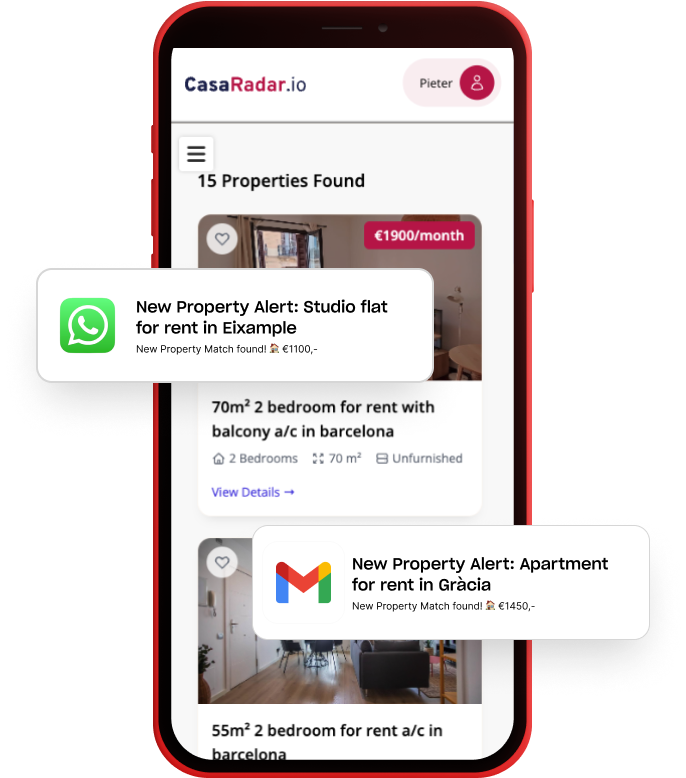
Where Rental House Listings Come to You
We track major and small real estate listing websites in Barcelona — so you don’t have to. Set your housing search criteria, and we’ll send you instant alerts the moment a new rental listing goes live that's fits your requirements.