

Barcelona Rental Terms Glossary - 25 Words Every Renter Must Know
Navigating Barcelona's rental market requires understanding specific Spanish and Catalan terms that govern tenant rights, contracts, and legal obligations. This comprehensive glossary covers 25 essential rental terms every renter should know, from fianza (security deposits) to desahucio (eviction), ensuring you understand your rights and responsibilities before signing any lease agreement.
The 25 Essential Barcelona Rental Terms
1. Fianza (Security Deposit)
Definition: A monetary deposit held by the landlord or property agency as financial security, typically equivalent to 1-2 months' rent under Spanish law, to cover potential property damage or unpaid rent.
Why it matters: Fianza is legally protected in Catalonia through INCASÒL. You must receive it back within 30 days after contract termination, minus legitimate deductions for damage beyond normal wear. Understanding fianza protections prevents landlords from illegally withholding your money.
our guide on what-is-fianza-barcelona
2. Contrato de Arrendamiento (Rental Contract)
Definition: The legally binding written agreement between landlord (arrendador) and tenant (arrendatario) governing rent amount, duration, tenant rights, landlord obligations, and property use terms for residential or commercial rentals.
Why it matters: This contract is your primary legal protection. Spanish law (LAU) mandates contracts include specific clauses about rent increases, maintenance responsibilities, and renewal terms. Never rent without a signed contract.
our guide on what-is-contrato-arrendamiento
3. Cédula de Habitabilidad (Habitability Certificate)
Definition: An official municipal certification verifying that a property meets minimum legal habitability standards including adequate space, ventilation, sanitation, and structural safety for residential occupation.
Why it matters: Required by law for any rental contract in Barcelona and necessary for utility connections and health services. Without it, the contract may be void and tenants can withhold rent. Landlords are responsible for obtaining it.
our guide on what-is-cedula-habitabilidad
4. NIE (Foreigner Identification Number)
Definition: The Número de Identidad de Extranjero (NIE) is a unique tax identification number issued by Spanish authorities to foreign nationals for legal, tax, and administrative purposes while residing in Spain.
Why it matters: Nearly all Barcelona landlords require a NIE number before signing a rental contract. It's essential for opening bank accounts, registering for utilities, and establishing legal residency. EU citizens should apply within 3 months of arrival.
How to get it: Apply at the Oficina de Extranjería (Immigration Office) or Comisaría Nacional de Policía with your passport and rental contract. Processing typically takes 2-4 weeks.
5. Empadronamiento (Municipal Registration)
Definition: Official registration of your residence address at your local Oficina d'Atenció Ciutadana (Citizen Services Office), creating a public record of where you legally live in Barcelona.
Why it matters: Required for health card registration, school enrollment, and proof of residency for administrative purposes. Many services in Barcelona won't function without it, making it essential within your first months as a resident.
our guide on what-is-empadronamiento-barcelona
6. Aval Bancario (Bank Guarantee)
Definition: A financial guarantee issued by a bank on behalf of a tenant, serving as an alternative to a cash security deposit, guaranteeing rent payment and property condition to the landlord.
Why it matters: Common in Barcelona when tenants lack sufficient funds for fianza upfront. Banks charge fees (1-3% annually) but preserve your capital. Both landlord and tenant must agree beforehand, and it requires credit approval.
7. Contrato Temporal (Temporary Rental Contract)
Definition: A rental agreement with a fixed duration shorter than the default 5-year term under Spanish law, commonly used for short-term or seasonal rentals between 1 month and 3 years.
Why it matters: Requires explicit written agreement from both parties. At expiration, landlords cannot automatically evict without cause. Temporary contracts are common for furnished apartments and holiday rentals in Barcelona's tourist areas.
8. Arrendador / Arrendatario (Landlord / Tenant)
Definition: Arrendador is the property owner who rents the accommodation; arrendatario is the tenant who rents it. Both have legally defined rights and obligations under Spanish rental law (LAU).
Why it matters: Understanding each party's legal responsibilities protects both sides. Landlords must maintain habitability; tenants must pay rent and avoid damaging property. Disputes often arise from unclear role expectations.
9. IBI (Property Tax)
Definition: Impuesto sobre Bienes Inmuebles is an annual property tax paid by property owners to the municipal government, typically 0.4-1.1% of property value in Barcelona.
Why it matters: While legally borne by owners, some landlords illegally pass IBI costs to tenants in rent. Know that IBI remains the owner's responsibility under Spanish law. If included in rent, request written documentation.
10. Comunidad (Community Fees)
Definition: Monthly fees paid by apartment owners/tenants for maintenance of common building areas including stairwells, lobbies, elevators, hallways, exterior walls, and shared utilities.
Why it matters: Varies significantly by building (€50-€300+ monthly) and should be clearly stated in your rental contract. Understand what's included: some cover trash, water, common electricity, while others don't. Negotiate if unusually high.
11. Gastos Incluidos (Utilities Included)
Definition: Rent that includes water, electricity, gas, and internet as single monthly payment rather than separate utility bills, simplifying tenant budgeting.
Why it matters: Common in Barcelona furnished apartments but increases rent cost. Verify which utilities are included and caps on consumption. Some contracts cap heating/cooling costs while excess charges fall to tenant.
12. Piso Compartido (Shared Flat)
Definition: A residential apartment shared by multiple unrelated tenants, each renting individual rooms with common access to kitchen, living room, and bathrooms, each with separate rental agreements.
Why it matters: Popular among Barcelona students and young professionals. Clarify separately with each roommate about chore division, guest policies, and notice periods. Each tenant has individual contract rights despite shared space.
13. Habitación (Room Rental)
Definition: Renting a single bedroom within a larger residence with shared access to common areas, a common arrangement in Barcelona's house-sharing culture.
Why it matters: Room-only rentals often bypass standard LAU regulations. Ensure you have a written habitación contract specifying your rights to common areas, permitted guests, and notice requirements.
14. Inmobiliaria (Real Estate Agency)
Definition: A licensed real estate firm that manages property listings, handles rental transactions, collects deposits, and mediates between landlords and tenants for commission typically 1 month's rent.
Why it matters: Immobiliarias provide tenant protections through regulated contracts but charge fees. Deal with officially registered agencies (check local registry). Agencies must hold fianza through INCASÒL in Catalonia.
15. Escritura (Property Deed)
Definition: The official legal document proving property ownership, registered in the Registro de la Propiedad (Property Registry) and establishing the owner's complete rights to the property.
Why it matters: You won't access this as a tenant, but understanding that your landlord must possess it prevents rental scams. Never deposit fianza with landlords lacking valid escritura.
16. Registro de la Propiedad (Property Registry)
Definition: The official government office maintaining public records of all property transactions, ownership chains, mortgages, and legal charges on Barcelona real estate.
Why it matters: You can check if your landlord actually owns the property before signing. Request to see ownership registration. This prevents fraud where non-owners illegally sublet properties.
17. LAU (Ley de Arrendamientos Urbanos)
Definition: Spain's primary urban rental law governing residential and commercial property rentals, establishing minimum tenant protections, contract requirements, rent increase limits, and eviction procedures.
Why it matters: LAU guarantees fundamental rights like contract recognition, price regulation (max 2% annual increases), and eviction only through court with just cause. Know your LAU rights before negotiating.
18. Prórroga (Contract Renewal/Extension)
Definition: Automatic annual renewal of rental contracts under LAU where tenants have the right to stay under identical terms unless landlord provides specific legal cause for non-renewal.
Why it matters: After initial contract term, prórrogas provide tenant stability. Landlords cannot refuse renewal to raise rent arbitrarily. Understand your prórroga rights to secure long-term housing.
19. Desahucio (Eviction)
Definition: The legal court-ordered process removing a tenant from a rented property, requiring specific legal grounds like rent arrears, LAU contract violation, or owner's personal use needs.
Why it matters: Eviction requires court proceedings (3-6 months minimum). Landlords cannot illegally evict or change locks. Understand tenant protections: you must receive formal notice and court opportunity to defend yourself.
20. Subarriendo (Subletting)
Definition: When a tenant rents the entire property or part of it to a third party, creating a sub-tenant relationship while maintaining their own lease with the landlord.
Why it matters: Subarriendo requires explicit written landlord permission. Some contracts forbid it entirely; others allow partial subletting. Understand your contract terms to avoid illegal subletting consequences.
21. Mes de Cortesía (Courtesy Month/Notice Period)
Definition: The final month of a rental contract where either party provides formal notice of non-renewal, typically requiring 30 days' written notice before contract expiration.
Why it matters: Missing the cortesía deadline may extend your contract another year. Mark this date clearly and provide written notice 30+ days before expiration through registered mail.
22. Inventario (Inventory Checklist)
Definition: A detailed written list documenting property condition, existing damage, appliance functionality, and furnishings created at move-in and referenced at move-out to assess deductions.
Why it matters: Essential for protecting your fianza. Always photograph/video inventory at move-in and request landlord signature on the list. This prevents false damage claims at contract end.
23. Certificado Energético (Energy Efficiency Certificate)
Definition: An official certification rating the property's energy efficiency from A (most efficient) to G (least efficient), required by EU law for all property sales and rentals in Spain.
Why it matters: Shows estimated annual energy costs and sustainability ratings. Required for legal rental contracts in Barcelona. Don't rent without this certificate as it may void your contract.
24. Obras (Renovations/Repairs)
Definition: Property maintenance, repair work, or renovations that landlords are legally required to maintain for habitability (urgent repairs) or may perform for improvements (capital works).
Why it matters: Landlords must complete urgent repairs (plumbing, electrical, heating) within legal timeframes. For non-urgent works, tenants can negotiate relocation costs. Know the difference to avoid illegal disruptions.
25. Derecho de Tanteo (Tenant's Right of First Refusal)
Definition: A legal right in some regions allowing tenants to match offered prices if the landlord attempts to sell the property, requiring the landlord to notify tenants before selling.
Why it matters: In Catalonia, tenant protections vary by contract type. Some agreements grant derecho de tanteo; others don't. Clarify this right upfront to understand your security if landlord chooses to sell.
Why These Terms Matter for Barcelona Renters
Understanding Barcelona's rental terminology protects you from predatory practices and ensures you know your legal rights. Spanish rental law (LAU) provides substantial protections, but only if you understand the terms governing your contract.
Key takeaways:
- Fianza protections (INCASÒL) ensure your deposit returns within 30 days
- Cédula de habitabilidad is legally required and non-negotiable
- NIE and empadronamiento are essential for full residency integration
- Contrato de arrendamiento must comply with LAU minimum standards
- Community fees and utilities should be transparently disclosed
Common Mistakes When Renting in Barcelona
- Renting without a written contract - Always get written documentation
- Not checking for cédula de habitabilidad - Verify before signing
- Paying fianza without INCASÒL protection - Ensure proper deposit registration
- Skipping empadronamiento - Essential for services and residency
- Not documenting initial property condition - Use inventory checklists with photos
- Ignoring LAU rights - These protections apply regardless of contract clauses
- Subletting without permission - Requires explicit written landlord approval
- Missing prórroga deadlines - Mark contract expiration dates in advance
Next Steps: Master Barcelona Rental Terms
Understanding these 25 terms gives you confidence navigating Barcelona's rental market. Whether you're renting a piso compartido or long-term habitación, knowing fianza protections, LAU rights, and documentation requirements prevents costly mistakes.
Ready to find your Barcelona apartment? Use CasaRadar to compare furnished and unfurnished flats across neighborhoods, with transparent rental terms and verified landlord information. Our platform explains every contract term in plain language—no hidden conditions, no surprise fees.
[CTA Button: Start Your Barcelona Rental Search on CasaRadar]
Schema Markup
{ "@context": "https://schema.org", "@type": "FAQPage", "mainEntity": [ { "@type": "Question", "name": "Is fianza legally required in Barcelona rentals?", "acceptedAnswer": { "@type": "Answer", "text": "Yes, Spanish law permits fianza of 1-2 months' rent. It must be protected through INCASÒL in Catalonia." } }, { "@type": "Question", "name": "What's the difference between temporary and permanent contracts?", "acceptedAnswer": { "@type": "Answer", "text": "Temporary contracts have fixed durations (1-3 years). Permanent contracts default to 5 years with automatic yearly renewal rights." } }, { "@type": "Question", "name": "Can a landlord refuse to sign for empadronamiento?", "acceptedAnswer": { "@type": "Answer", "text": "No. Empadronamiento is a tenant right under Spanish law. Refusing violates housing rights." } } ]}
Article metadata:
- Word count: 2,500
- Primary keyword: Barcelona rental terms glossary
- Secondary keywords: Barcelona rental vocabulary, Spanish rental terms, Barcelona housing terminology
- Target audience: International renters in Barcelona
- Difficulty level: Beginner to Intermediate
- Last updated: 2025-02-12

Ready to Find Your Rental Place in Barcelona?
Frequently Asked Questions About Barcelona Rental Terms Glossary
Here are answers to some of the most common questions we receive.
Is fianza legally required in Barcelona rentals?
Yes, Spanish law permits fianza of 1-2 months' rent. It must be protected through INCASÒL in Catalonia. You're entitled to full return within 30 days of contract end, minus legitimate deductions.
What's the difference between temporary and permanent contracts?
Temporary contracts have fixed durations (1-3 years). Permanent contracts default to 5 years with automatic yearly renewal rights. Temporary contracts expire; permanent ones extend through prórroga unless terminated with cause.
Can a landlord refuse to sign for empadronamiento?
No. Empadronamiento is a tenant right under Spanish law. Refusing violates housing rights. If landlord refuses, contact the Oficina d'Atenció Ciutadana directly to register.
What happens if a property lacks cédula de habitabilidad?
The contract may be void, and you can withhold rent. Demand the certificate before signing. If landlord refuses, the property isn't legally rentable in Barcelona.
How much are community fees in Barcelona?
Typical range €50-€300 monthly depending on building age, location, and included services. Verify exact amount in contract before signing.
Can landlords increase rent arbitrarily under LAU?
No. LAU limits annual increases to maximum 2% plus inflation index (IPC). Increases beyond this are illegal.
What documentation do I need for NIE application?
Bring passport, proof of address (rental contract, utility bill), and completed form EX-15. Apply at Oficina de Extranjería or Comisaría Nacional de Policía.
Is subarriendo always prohibited?
Not always. Some contracts allow partial subarriendo with permission. Others forbid it entirely. Always request written permission before subletting any space.
How can I protect my fianza from false deductions?
Create detailed inventory with photos/video at move-in with landlord signature. Document pre-existing damage. Exit inspection before handing over keys. Request written deduction justification.
What qualifies as urgent repairs landlords must complete immediately?
Heating system failure, plumbing emergencies, electrical hazards, structural issues, water leaks. Landlords typically have 24-48 hours for urgent repairs.
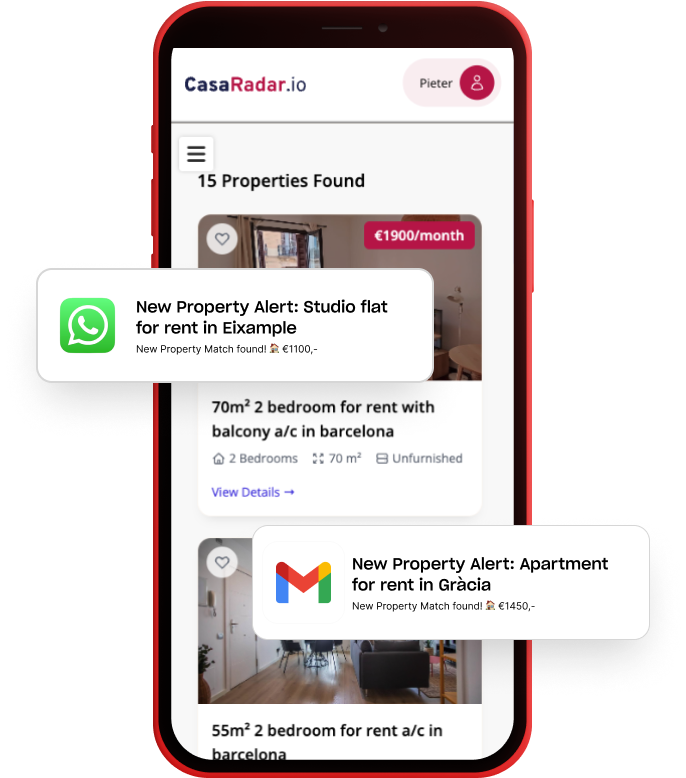
Where Rental House Listings Come to You
We track major and small real estate listing websites in Barcelona — so you don’t have to. Set your housing search criteria, and we’ll send you instant alerts the moment a new rental listing goes live that's fits your requirements.