

Barcelona for Digital Nomads: Where to Live & How to Rent Fast
Barcelona is one of Europe's top digital nomad cities—and for good reason. With over 300 days of sunshine annually, reliable fiber internet, a thriving coworking culture, an affordable cost of living compared to other Western European capitals, multiple visa options, and a genuinely welcoming international community, Barcelona checks every box for remote workers looking to build a life abroad. Whether you're planning a three-month trial run or a longer relocation, this guide will walk you through everything you need to know: which neighborhoods match your lifestyle, how to secure an apartment fast, visa requirements, budget breakdowns, and the practical steps that actually work.
Why Barcelona Is One of the Best Cities for Digital Nomads
Weather and Lifestyle
Barcelona's climate is a significant draw for digital nomads. With approximately 300 days of sunshine per year and average temperatures ranging from 8°C (46°F) in winter to 28°C (82°F) in summer, the city offers a genuinely Mediterranean lifestyle year-round. You can work from a beachfront café in January without shivering, and your daily commute can involve a morning swim. This climate also makes Barcelona infinitely more livable than many northern European cities during the winter months when many nomads begin to feel cabin fever.
Beyond the weather, Barcelona cultivates a lifestyle that prioritizes work-life balance. The city embraces outdoor working culture—cafés are filled with laptops during the day, parks host remote workers on blankets, and the beach is never more than a short metro ride away. There's a cultural acceptance of flexible working and entrepreneurship that makes digital nomadism feel normal rather than unusual.
Internet Quality and Connectivity
Reliable internet is non-negotiable for remote workers, and Barcelona delivers. Most apartments in modern buildings come equipped with fiber optic connections (fibra óptica) offering speeds of 300–600 Mbps, with some premium installations reaching gigabit speeds. Even older buildings in central neighborhoods typically have ADSL or cable options providing 50–100 Mbps—more than sufficient for video calls, collaborative work, and streaming.
Mobile internet is equally robust. Spanish carriers like Movistar, Vodafone, and Orange offer unlimited data plans for €20–40/month with consistent 4G coverage throughout the city. Most coworking spaces provide backup internet on separate networks, a valuable safety net for client calls or time-sensitive work. Digital nomads report that internet reliability in Barcelona ranks among the best in Europe.
The Coworking Ecosystem
Barcelona's coworking scene is mature and diverse, catering to every budget and work style. Aticco operates multiple locations across the city (Poblenou, Eixample, Gran Via) with event-driven community, dedicated desks, and hot-desking options. MOB in El Born specializes in creative professionals and offers an integrated café. OneCoWork has locations in both Eixample and Poblenou with flexible day passes (€15–25) and monthly memberships (€200–300). Betahaus in Born functions as more of a creative hub and community space. Cloudworks operates across several neighborhoods with a focus on flexibility and networking.
For budget-conscious nomads, the coworking café culture is equally important. Establishments like SlowMov in Gràcia, Syra in Gràcia, and dozens of cafés throughout the city offer strong WiFi, proper seating, and a tacit understanding that ordering one coffee buys you three hours of workspace. This significantly reduces daily costs while maintaining productive environments.
Beyond dedicated spaces, Barcelona's infrastructure supports distributed working. Libraries, museums, parks, and public spaces all have solid connectivity. Many nomads rotate between coworking, cafés, and home offices depending on their mood and workload.
International Community and Networking
Barcelona hosts one of Europe's largest and most established digital nomad communities. The city attracts remote workers from across the globe—Americans, Germans, French, Australians, and many others—creating a genuinely multicultural environment. This matters practically: there are Meetup groups specifically for digital nomads, regular networking events, language exchange gatherings, and established social channels where newcomers quickly find their people.
Organizations like Digital Nomad Barcelona and various Slack communities facilitate connections between remote workers. You'll find established nomads willing to share neighborhood recommendations, apartment hunting tips, and insider knowledge about everything from dentists who speak English to the best weekend escape routes. This peer support network significantly reduces the friction of relocating internationally.
Cost of Living: Competitive but Climbing
Barcelona remains more affordable than Madrid, London, Berlin, or Amsterdam, though prices have risen noticeably in recent years. Budget digital nomads can live comfortably on €1,800–2,200/month including rent, while those seeking more comfort might spend €2,500–3,500/month. This compares favorably to Northern European cities and rivals Southeast Asian capitals when you factor in Barcelona's superior infrastructure, political stability, and access to EU opportunities.
The cost advantage is particularly pronounced for accommodations. Mid-range apartments rent for €1,000–1,500/month in popular nomad neighborhoods, significantly less than equivalent spaces in London (£1,200–2,000) or Amsterdam (€1,300–2,000). Groceries, dining, and entertainment also remain reasonably priced, though tourist areas inflate costs.
Food, Culture, and Nightlife
Barcelona offers exceptional quality of life beyond just cost and connectivity. The city's food scene ranges from Michelin-starred restaurants to neighborhood markets offering fresh produce at minimal cost. The weekly Sant Antoni market sells vegetables, cheese, and prepared foods at prices that would surprise anyone from Northern Europe or North America. Vermouth bars serve premium aperitifs for €2–3, and a quality three-course meal in a neighborhood restaurant runs €12–18.
Culturally, Barcelona never rests. The city hosts world-class museums (Picasso Museum, MNAC), architecture that makes everyday walks feel like tourism (Gaudí's legacy), festivals throughout the year, and neighborhoods that operate as semi-independent villages with distinct personalities. For remote workers, this means your non-working hours are filled with genuine cultural engagement rather than artificial entertainment.
The nightlife caters to various preferences. Gràcia offers intimate bars and live music venues. Born thrives with cocktail culture and sophisticated nightlife. Poblenou provides a more laid-back beach bar scene. Even quieter neighborhoods maintain active social calendars without the overwhelming party atmosphere of some European cities.
Safety, Walkability, and Infrastructure
Barcelona is a genuinely safe city, ranking well above average for Western European capitals in safety metrics. Street crime exists (pickpocketing in tourist areas, bike theft), but violent crime is rare, and neighborhoods where nomads typically live are particularly secure. The metro system is extensive, clean, and affordable (€54 for a 10-journey pass, €60 for unlimited monthly access). Most neighborhoods are highly walkable, making car ownership unnecessary.
This combination of safety, walkability, and reliable public transportation eliminates a significant source of stress for many digital nomads, particularly solo travelers and women working remotely.
For more on neighborhoods and lifestyle fits, explore our guide on best-neighborhoods-rent-barcelona.
Spain's Digital Nomad Visa: What You Need to Know
Spain introduced its Digital Nomad Visa in 2023, creating a formal pathway for remote workers seeking to establish residency. This visa is distinct from Spain's standard tourist or work visas and specifically designed for individuals earning income outside Spain.
Visa Requirements and Eligibility
To qualify for Spain's Digital Nomad Visa, you must demonstrate:
- A minimum monthly income of €2,300 (approximately €27,600 annually), though this is generally the baseline and some documentation sources reference higher figures
- Employment with a company registered outside Spain or self-employment with clients primarily outside Spain
- Proof of income through tax returns, employment contracts, bank statements, or business registration documents
- Valid health insurance (either Spanish or portable coverage from your home country)
- A clean criminal record and passing health checks
You're not required to have a Spanish employer, register as Spanish self-employed (autónomo), or immediately obtain a NIE (Número de Identidad de Extranjeros). The visa specifically accommodates those earning remotely for non-Spanish entities.
Duration and Renewal
The initial Digital Nomad Visa grants residency for one year and is renewable for an additional two years, creating a pathway to three years of continuous residency. This duration works well for many digital nomads—long enough to establish stability without the pressure of indefinite commitment.
After three years on this visa, you may transition to other residency pathways (particularly if your income situation has evolved) or apply for temporary or permanent residency through other channels if desired.
Tax Implications and Obligations
An often-overlooked aspect: obtaining Spanish residency (which the Digital Nomad Visa grants) triggers Spanish tax residency. As a Spanish tax resident, you're technically required to declare worldwide income to Spanish authorities and potentially pay Spanish taxes, though tax treaties with your home country often prevent double taxation.
The practical implications depend heavily on your citizenship, home country tax obligations, and specific circumstances. Many digital nomads consult with a gestoría (Spanish tax advisor) or international tax professional to understand their position. Some maintain non-residency status (visiting for less than 183 days per year) to avoid tax complications, though this eliminates visa security.
For comprehensive guidance on residency and documentation, see our guide on nie-number-barcelona-renting.
The Best Neighborhoods in Barcelona for Digital Nomads
Barcelona's distinct neighborhoods have genuinely different vibes, costs, and appeals. Choosing the right area significantly impacts your day-to-day life and productivity.
Poblenou — The Nomad Epicenter
The Vibe: Poblenou is Barcelona's digital nomad headquarters. Once an industrial area, it's been transformed into a creative district with tree-lined streets, art galleries, vintage shops, and a relaxed Mediterranean atmosphere. The neighborhood culminates in Rambla del Poblenou, a pedestrian boulevard leading directly to the beach. There's a palpable entrepreneurial energy—coworking spaces outnumber regular offices, cafés are filled with laptops, and the population skews heavily toward young professionals and creatives.
Why Nomads Love It: Poblenou offers an unbeatable combination of professional infrastructure and lifestyle amenities. Aticco, one of Europe's largest coworking spaces, maintains a major hub here alongside CREC and Tornasol. The neighborhood has matured enough to offer everything (supermarkets, restaurants, laundry services), while maintaining its laid-back creative character. Beach access is immediate—your lunch break can involve a 15-minute walk to Mediterranean water. The metro connections are excellent, and weekend nightlife centers on beach bars and chilled venues rather than overwhelming club scenes.
The international population is remarkably high, meaning English-speaking services, English-language social groups, and a general acceptance of transient populations without the "tourist area" feeling of Las Ramblas.
Typical Rent: €1,000–€1,500 for a one-bedroom furnished apartment in mid-term rental situations (the standard for nomads).
Best For: Remote workers prioritizing community, those valuing beach proximity, creatives seeking collaborators, and anyone wanting professional infrastructure combined with lifestyle balance.
Gràcia — Creative Village Energy
The Vibe: Gràcia operates as Barcelona's bohemian village—a neighborhood that somehow maintains small-town character within a sprawling city. Plazas serve as informal town centers where locals gather for vermouth and conversation. Independent shops outnumber chains, cafés foster genuine community, and artistic projects appear in unexpected places. The neighborhood has a distinctly political and creative bent, hosting galleries, bookstores, vintage boutiques, and independent restaurants that reflect neighborhood values rather than commercial calculation.
Why Nomads Love It: Gràcia attracts nomads seeking authentic Barcelona life rather than nomad bubble culture. The coworking scene is present but not overwhelming—places like SlowMov and Syra function as community cafés rather than professional corporate spaces. The neighborhood feels genuinely lived-in rather than transactional. Rent is notably cheaper than beachfront areas or ultra-central locations. Public plazas (particularly Plaça del Sol and Plaça de la Virreina) become natural informal offices where remote workers camp out with laptops, connecting with neighbors over coffee.
The international community exists without dominating. You'll encounter digital nomads, but they're mixed with artists, local families, longtime residents, and students. This diversity creates richer social experiences than single-demographic neighborhoods.
Typical Rent: €900–€1,400 for a one-bedroom, making it among Barcelona's more affordable nomad-friendly areas.
Best For: Remote workers seeking authentic neighborhood life, those uncomfortable with nomad bubble culture, creatives, and budget-conscious digital nomads willing to trade proximity to beach for neighborhood character and cost savings.
Eixample — The Central All-Rounder
The Vibe: Eixample (pronounced "eye-SHAM-pluh") is Barcelona's formal grid district—a planned neighborhood with wide avenues, elegant apartment buildings, and a more professional atmosphere than artistic areas. The district is the geographic heart of the city, with metro connections to everywhere and Gaudí's architectural masterpieces (Sagrada Familia, Casa Batlló) as natural landmarks. It functions as Barcelona's business district while maintaining significant residential character.
Why Nomads Love It: Eixample offers practical centrality. Everything is accessible via public transport or bike. The metro infrastructure is exceptional—multiple lines intersect here, and trains arrive every 2–3 minutes. Restaurants range from budget to haute cuisine. Multiple coworking spaces (OneCoWork, WeWork, Cloudworks branches) maintain presences here. The neighborhood has professional infrastructure without sacrificing lifestyle—you're never more than a 20-minute walk from parks, and the Sant Antoni market area provides vibrant social zones.
The trade-off: Eixample feels more cosmopolitan and less distinctly Barcelona than neighborhood-oriented areas. It caters to professionals more than creatives. Rent runs higher than Gràcia or Sant Antoni. But the convenience and centrality appeal strongly to those prioritizing efficiency and access.
Typical Rent: €1,100–€1,600 for a one-bedroom, reflecting central location and modern infrastructure.
Best For: Remote workers prioritizing connectivity and access, those maintaining significant client meetings requiring central locations, and professionals comfortable with higher-end urban living.
El Born — Trendy and Social
The Vibe: El Born is Barcelona's medieval heart—narrow Gothic streets, hidden plazas, galleries, and a palpable sense of history. The neighborhood has undergone significant gentrification and now operates as the city's trendiest social district. Countless bars, restaurants, and cultural venues crowd narrow streets. Street life is central here—locals and visitors intermingle in an almost perpetually festive atmosphere. The neighborhood never quiets down; there's always activity, music, or socializing happening.
Why Nomads Love It: El Born attracts socially-oriented digital nomads who want vibrant neighborhood life without geographic isolation. The nightlife scene is genuinely excellent—cocktail bars, clubs, live music venues, and tapas spots line every street. Coworking options (Betahaus, MOB) maintain strong communities. The neighborhood hosts excellent restaurants, bookstores, and cultural institutions. It feels authentically Barcelona rather than purpose-built for tourism, despite tourist presence.
The downside: El Born can feel overwhelming on weekend evenings and excessively social for remote workers prioritizing quiet focus. Rent has climbed with gentrification. The narrow medieval streets create noise issues in some apartments. It's less neighborhoody than Gràcia, more raucous than Eixample.
Typical Rent: €1,100–€1,600 for a one-bedroom, with premium pricing for prime locations.
Best For: Socially-oriented remote workers, those seeking nightlife and cultural venues, younger nomads prioritizing social community, and anyone comfortable with neighborhood noise and bustle.
Diagonal Mar and Vila Olímpica — Modern Beachfront
The Vibe: These adjacent neighborhoods represent Barcelona's modern face. Built for the 1992 Olympics, Diagonal Mar and Vila Olímpica feature contemporary apartment buildings, modern amenities, gyms, retail spaces, and direct beach access. The architecture is noticeably newer and more international than other areas. These neighborhoods feel less distinctly Barcelona and more like upscale beachfront developments found globally.
Why Nomads Love It: For those prioritizing modern lifestyle, proximity to beach, and contemporary infrastructure, these neighborhoods deliver. Apartments tend to be recently renovated, furnished to higher standards, and equipped with modern appliances and reliable utilities. Gyms, supermarkets, and chain restaurants are abundant. Beach access is exceptional—your balcony might overlook Mediterranean water. The international population is substantial, meaning English-language services and expat-oriented amenities.
The trade-off is authenticity and community. These neighborhoods feel less like living in Barcelona and more like a modern beach resort. Nightlife is more resort-bar focused than genuine local establishment. They lack the neighborhood character of Gràcia or Born.
Typical Rent: €1,200–€1,800 for a one-bedroom, reflecting newer construction, modern amenities, and prime beach location.
Best For: Remote workers prioritizing modern lifestyle and beach proximity, those seeking familiar amenities and international infrastructure, and anyone uncomfortable with older European buildings or neighborhood grit.
Sant Antoni — Emerging Nomad-Friendly
The Vibe: Sant Antoni is Barcelona's working-class neighborhood experiencing gentrification. Once overlooked by tourists and upscale Barcelona explorers, it's now attracting young professionals, creatives, and digital nomads seeking authentic Barcelona character and more affordable costs. The Sant Antoni Market (Mercat de Sant Antoni) is a stunning iron structure selling produce, cheese, and prepared foods. Weekends fill the market with brunch-seekers and street vendors. Cocktail bars and independent restaurants increasingly populate surrounding streets, though the neighborhood remains fundamentally residential with local families and longtime businesses.
Why Nomads Love It: Sant Antoni offers genuine Barcelona character at costs noticeably below beachfront and central areas. The neighborhood is increasingly nomad-friendly without being nomad-dominated. Modern coworking infrastructure is emerging. The market provides incredible fresh food access at minimal cost. Restaurants are exceptional value—quality three-course meals for €12–15. The metro connection is straightforward (L2 line). Weekend social scene around the market is genuinely Barcelona, not touristic.
Sant Antoni represents a different nomad value proposition than Poblenou or Gràcia—it's less established as a nomad hub but offers better value and emerging community.
Typical Rent: €1,000–€1,400 for a one-bedroom, among Barcelona's best value in genuinely appealing neighborhoods.
Best For: Budget-conscious remote workers, those seeking emerging communities with growth potential, anyone comfortable with neighborhood gentrification and gradual change, and those valuing market culture and food access.
For detailed neighborhood comparisons and additional options, visit our guide on best-neighborhoods-rent-barcelona.
Monthly Cost Breakdown for Digital Nomads in Barcelona
Understanding realistic costs helps you budget and determine which lifestyle tier matches your income and preferences.
Budget Digital Nomad: €1,800–€2,200/month
- Housing: €900–€1,200 (shared apartment or one-bedroom in Gràcia/Sant Antoni)
- Coworking: €150–200 (occasional membership or coffee-working at cafés)
- Groceries: €250–300 (cooking most meals, shopping at markets)
- Eating Out: €300–400 (lunch takeaway 2–3x weekly, casual dinners)
- Metro Pass: €60 (unlimited monthly travel)
- Phone/Internet: €30–50 (mobile data plan, home internet included in rent)
- Health Insurance: €100–150 (basic coverage through gestoría or private plans)
- Entertainment: €100–200 (occasional activities, drinks, socializing)
- Buffer for Unexpected: €100–150
This budget assumes disciplined spending, cooking regularly, limited nightlife, and utilizing coworking cafés rather than premium spaces. Many digital nomads operate successfully at this level in Barcelona.
Comfortable Digital Nomad: €2,500–€3,500/month
- Housing: €1,200–€1,600 (one-bedroom in central locations, modern amenities)
- Coworking: €250–350 (dedicated desk at established coworking space)
- Groceries: €350–450 (quality ingredients, occasional prepared foods)
- Eating Out: €600–800 (regular restaurant meals, occasional nicer dinners)
- Metro Pass: €60
- Phone/Internet: €40–60
- Health Insurance: €150–200 (more comprehensive coverage)
- Entertainment: €250–400 (activities, entertainment, social events)
- Personal Services: €150–250 (gym, haircuts, occasional massage)
- Buffer: €150–200
This tier allows genuine lifestyle enjoyment—regular restaurant meals, coworking community benefits, personal services, and discretionary spending without constant budgeting.
Premium Digital Nomad: €3,500+/month
- Housing: €1,600–€2,500+ (high-end furnished apartments, sea views, premium areas)
- Coworking: €400+ (premium membership, dedicated desks at exclusive spaces)
- Dining: €1,000+ (regular restaurant meals, nicer establishments)
- Entertainment/Activities: €500+ (travel, activities, cultural events)
- Services: Premium fitness, wellness, personal services
- Everything else: No budget constraints
This tier represents comfort-maximized living with minimal spending constraints.
Cost Context
Barcelona's costs remain reasonable compared to other Western European cities. These budgets include housing, the largest expense category. For reference: London ranges €2,500–4,500+, Amsterdam €2,300–4,000+, Berlin €1,800–3,200 (more similar to Barcelona due to supply), and Paris €2,300–3,800+.
Most established digital nomads in Barcelona operate in the "comfortable" tier (€2,500–3,500), balancing financial sustainability with lifestyle quality.
How to Find an Apartment in Barcelona Fast as a Digital Nomad
Finding accommodation is the critical bottleneck preventing many digital nomads from moving to Barcelona. The challenge isn't Barcelona's lack of supply—it's that listings are scattered across fragmented platforms, disappear rapidly, and landlords often prioritize applicants who can view in person. However, systematic approaches significantly improve success rates.
Know What Type of Rental You Need
Barcelona's rental market divides into categories:
Long-term rentals (contratos de larga duración) are standard 12+ month leases at lower monthly rates but typically require Spanish employment, NIE numbers, or extensive documentation. These are rarely suitable for digital nomads doing initial exploratory moves.
Mid-term furnished rentals (temporada contracts, typically 32 days to 11 months) are the digital nomad standard. These are specifically designed for temporary occupants, require less documentation, and allow furnished apartments with utilities often included. Monthly rates are higher than long-term leases (10–20% premium) but the flexibility justifies costs.
Short-term vacation rentals (like Airbnb, Booking.com) offer maximum flexibility but sacrifice cost efficiency—running €40–80 daily quickly becomes prohibitive for extended stays.
Most digital nomads move through a progression: Airbnb for 1–4 weeks while apartment hunting, then secure a mid-term furnished lease for their actual stay. This two-stage approach reduces pressure to commit to a building sight-unseen while providing stability once you've experienced Barcelona briefly.
For detailed guidance on rental contracts and documentation, see our guide on what-is-contrato-arrendamiento.
Prepare Your Documents Before Searching
Barcelona landlords rightfully want confidence in their tenants. Having documentation ready before seriously searching dramatically improves response rates.
Essential documents:
- Valid passport (copy + photo page)
- Proof of income (tax returns, employment contract, client list with income estimates)
- Employer letter on company letterhead stating your employment, remote work authorization, and monthly income
- Bank statements (typically 3–6 months) showing deposit patterns and financial stability
- References from previous landlords (if available)
Less critical but helpful:
- Proof of health insurance
- Curriculum vitae or LinkedIn profile
Common misconception: You don't need a NIE (Spanish ID number) to rent initially. Many digital nomads successfully rent apartments before obtaining NIE numbers. However, NIE becomes necessary for opening Spanish bank accounts, formalizing residence, or long-term staying. For more on NIE processes, see our guide on nie-number-barcelona-renting.
Many nomads gather these documents digitally, creating a "rental packet" PDF they can email instantly to landlords. This responsiveness often determines outcomes—landlords receive numerous inquiries and prioritize organized, communicative applicants.
Use Instant Alerts Instead of Manual Browsing
Here's the critical insight: Barcelona listings are scattered across 10+ fragmented platforms (Idealista, Fotocasa, Habitaclia, Spotahome, HousingAnywhere, Airbnb, Facebook groups, WhatsApp, personal websites) with no aggregation except traditional search engines. A listing might appear on Fotocasa but not Idealista; disappear from Habitaclia within hours; be posted in a Facebook group at 2 AM and receive 30 inquiries by 8 AM.
Manual browsing fails because:
- Timing disadvantage: Quality listings are rented within hours. By the time you browse, apply, and wait for response, the apartment is gone.
- Platform fragmentation: Checking 50+ platforms multiple times daily is impractical and inefficient.
- Information gaps: You might miss listings on platforms you forgot to check regularly.
- Reactive approach: You're chasing available stock rather than being positioned to act instantly on new matches.
CasaRadar solves this through instant alerts. The platform aggregates listings from Idealista, Fotocasa, Habitaclia, Spotahome, HousingAnywhere, and other major platforms, continuously monitoring for new postings matching your criteria. When an apartment appears that matches your search (neighborhood, price, apartment type, move-in date), you receive instant notification—often before the listing has been widely discovered.
This dramatically improves outcomes. Instead of browsing manually and fighting dozens of other inquiries, you're informed instantly and can contact landlords within minutes of listing posting. Landlords remember the first serious inquiry with prepared documentation; they remember you.
For comprehensive platform comparisons and strategies, see our guide on idealista-vs-fotocasa-vs-casaradar.
Write Messages That Get Replies
Landlord response patterns in Barcelona are predictable. Generic inquiries ("Is this available? I'm interested") get ignored. Thoughtful messages highlighting your profile and stability get responses.
Template approach:
"Hello [Landlord Name],
I'm [Your Name], a remote worker from [Country] relocating to Barcelona. I'm interested in your apartment at [Address] available from [Move-in Date]. I'm looking for a [timeframe]-month furnished rental and am available to view [timeframe].
I have a steady remote income of €[amount]/month with [brief company description]. I've attached my passport, employment contract, and bank statements. I'm committed to a responsible tenancy and respect for the space.
Are you available for a video viewing? I'm flexible with timing.
Best regards,[Your Name]"
Why this works:
- Demonstrates responsibility and financial stability upfront
- Shows you've prepared documentation (removes landlord hesitation)
- Provides specific information rather than generic interest
- Offers flexibility on viewing, reducing landlord friction
- Shows genuine intent rather than casual browsing
Standing out further:
- Mention specific aspects of the apartment in your message (showing you've read the full listing, not sending mass inquiries)
- Include a photo of yourself and brief background
- If you can offer longer-term commitment (6+ months rather than month-to-month), highlight this
- Mention any relevant local connections or references
Landlords are humans responding to humans. Thoughtful, complete, personalized messages get responses. Generic inquiries don't.
Can You Rent Before Arriving?
Absolutely. Many digital nomads successfully rent apartments from abroad through entirely digital processes. This requires:
For video tours: Request a video tour from the landlord—increasingly common as standard practice. Quality videos showing each room, natural light, kitchen functionality, and storage typically suffice for decision-making. Ask specific questions about internet connection, water pressure, heating, and neighborhood noise.
For contracts: Digital contracts and electronic signatures (through platforms like Adobe Sign, DocuSign, or HelloSign) are legally valid in Spain. Many landlords facilitate this for international applicants.
For payment: Bank transfer deposits are standard. Use international transfer services (Wise, OFX, or direct bank transfers) to avoid exchange rate losses. Expect to pay first month, last month, and potentially agency fees upfront.
Practical risks: Renting sight-unseen carries inherent risk—the apartment might have hidden issues, photos might misrepresent reality, or landlords might be unreliable. Many digital nomads mitigate this by:
- Initially booking 2–4 weeks on Airbnb after arrival
- Apartment hunting in person those first weeks
- Then securing a longer mid-term lease once they've seen options physically
- Or, if renting sight-unseen, ensuring flexible cancellation terms in contracts
This phased approach reduces risk while preserving flexibility. Alternatively, thorough video tours with specific questioning can provide sufficient confidence for international rental.
Coworking Spaces in Barcelona: The Complete List
Barcelona's coworking ecosystem spans price ranges, communities, and neighborhoods. Here's an overview of established spaces where digital nomads congregate:
Aticco operates Barcelona's largest coworking network with locations in Poblenou, Eixample, and Gran Via. Known for strong community events, entrepreneurial culture, and mature operations. Day passes €20–25, monthly memberships €200–350 depending on access level.
MOB in El Born specializes in creative professionals with an integrated café, workshop space, and community-driven culture. Smaller and more intimate than Aticco but strong community vibe. Monthly memberships €250–350.
OneCoWork maintains locations in Eixample and Poblenou with flexible membership structures. Focus on affordability and accessibility. Day passes €15–20, monthly €150–250.
Betahaus in El Born functions as community space, creative hub, and coworking hybrid. Strong for networking and collaboration, less traditional corporate. Monthly memberships €200–300.
Cloudworks operates across Barcelona with multiple locations and focus on flexibility. Appeals to those needing variable attendance patterns. Day passes €18–22, monthly €180–280.
WeWork maintains an Eixample location for those seeking corporate-style coworking. Premium pricing (€450–600/month) for modern infrastructure and professional environment.
CREC in Poblenou serves Barcelona's startup ecosystem with event programming and investor access. Monthly memberships €250–400.
Barcelona Coworking and various neighborhood options exist throughout the city, with many smaller spaces in Gràcia, Sant Antoni, and other neighborhoods.
Café working culture deserves emphasis: Barcelona's café culture supports laptop work. SlowMov in Gràcia, Syra in Gràcia, Flax & Kale throughout the city, and countless independent cafés provide strong WiFi, adequate seating, and cultural acceptance of all-day working for single-coffee customers. For budget-conscious nomads, café working remains viable and often provides superior social atmosphere to dedicated coworking.
Most digital nomads combine modalities—coworking for serious focus days and client meetings, café working for regular days, and home offices for flexibility.
Best Nomad Lifestyle by Type
Different digital nomads optimize for different values. Here's matching your priorities to neighborhoods:
Beach + Productivity → Poblenou: Coworking infrastructure, beach access, and established nomad community make Poblenou the default choice for those wanting professional environment combined with Mediterranean lifestyle.
Creative + Community → Gràcia: Independent neighborhood character, authentic Barcelona culture, and emerging creative community appeal to those uncomfortable with nomad bubble culture and prioritizing local integration.
Central + Nightlife → Eixample/El Born: Maximum convenience and nightlife are concentrated in Barcelona's central neighborhoods, suited for those prioritizing urban lifestyle and access over neighborhood character.
Modern + Peaceful → Diagonal Mar/Vila Olímpica: Contemporary infrastructure, beach proximity, and quieter vibe appeal to those seeking modern comfort and nature balance without neighborhood chaos.
Budget-Friendly → Sant Antoni/Sants: Emerging neighborhoods with excellent value and authentic Barcelona culture appeal to financially-conscious nomads willing to trade some convenience for cost savings.
Common Mistakes Digital Nomads Make in Barcelona
Learning from others' errors accelerates your success:
Searching too slowly: Waiting days between apartment inquiries or searches means missing quality listings within hours of posting. The cost of procrastination is significant.
Only checking one platform: Spotahome or Idealista alone will miss 40–50% of Barcelona's market. Fragmentation requires multiplatform awareness or aggregation tools.
Not having documents ready: Landlords receive dozens of inquiries within hours of listing posting. Undocumented applicants are filtered immediately.
Choosing the wrong neighborhood: Picking based on Instagram aesthetic or online reputation rather than lifestyle fit leads to uncomfortable relocations. What works for extroverted socializers won't work for focused professionals.
Paying before viewing: Scams exist, though less common in Spain than some countries. Verify landlords, request video tours if distant, and ensure contracts are clear before payment.
For detailed scam prevention strategies, see our guide on avoid-rental-scams-barcelona.
Underestimating move-in complexity: Arriving without utilities registered, furniture arrangements, or neighborhood understanding creates friction. Planning these logistics before arrival improves transition quality.
Find Your Perfect Digital Nomad Apartment in Barcelona
The apartment search process doesn't need to be overwhelming. CasaRadar aggregates listings from all major Barcelona platforms—Idealista, Fotocasa, Habitaclia, Spotahome, HousingAnywhere, and others—into a single search interface with instant alerts.
Instead of manually checking dozens of platforms multiple times daily and missing quality listings within hours of posting, set your criteria once (neighborhood, price, move-in date, apartment type) and receive instant notifications when new listings match. Most digital nomads who use CasaRadar significantly reduce search time and dramatically improve their success rate.
Ready to find your Barcelona base? Get started with CasaRadar—search apartments, set instant alerts, and receive notifications for new listings matching your criteria. Stop searching manually. Start living in Barcelona.
Sign up free today and join the thousands of digital nomads already settled in Barcelona through smarter apartment hunting.

Ready to Find Your Rental Place in Barcelona?
Frequently Asked Questions About Digital Nomads Barcelona
Here are answers to some of the most common questions we receive.
Is Barcelona good for digital nomads?
Yes, Barcelona is among Europe's best digital nomad destinations. The combination of excellent internet, affordable cost of living (compared to other Western European capitals), established coworking infrastructure, Mediterranean climate, rich culture, and a welcoming international community make it genuinely appealing. Most digital nomads who've tried Barcelona rate it highly—many extend their initial plans significantly.
How much does it cost to live in Barcelona as a digital nomad?
Most digital nomads operate on €1,800–3,500/month depending on lifestyle tier. This includes housing (typically €900–1,600), coworking (€150–300), groceries (€250–450), dining out (€300–800), utilities, transportation, and discretionary spending. Barcelona remains more affordable than London, Amsterdam, Paris, or Zurich while offering comparable infrastructure and quality of life.
Do I need a visa to work remotely from Barcelona?
Spain's Digital Nomad Visa (introduced 2023) provides formal residency for remote workers with non-Spanish income exceeding €2,300/month. However, many digital nomads enter on tourist visas (90-day visa-free for US/EU citizens, extendable through visa runs or renewal processes). The Digital Nomad Visa formalizes your status and provides stronger legal standing if long-term Barcelona residence is intended.
Can I find a furnished apartment for 3–6 months?
Absolutely. Barcelona's mid-term furnished rental market (temporada contracts) is specifically designed for 3–12 month stays. These are more expensive than yearly leases (10–20% premium) but offer flexibility and typically include utilities. Using aggregation tools like CasaRadar dramatically improves your ability to find options quickly across fragmented platforms.
What internet speeds can I expect in Barcelona?
Most modern apartments offer fiber optic (fibra óptica) connections with 300–600 Mbps speeds. Older buildings typically have ADSL or cable providing 50–100 Mbps—sufficient for video calls and remote work. Mobile internet through Spanish carriers (Movistar, Vodafone, Orange) provides reliable 4G backup. Coworking spaces universally offer robust connectivity with backup internet networks. Internet reliability in Barcelona ranks among Western Europe's best.
Is it safe for solo digital nomads?
Barcelona is genuinely safe for solo travelers. Violent crime is rare. Pickpocketing exists in tourist areas (Las Ramblas, metro during rush hour) but is easily avoidable through standard urban awareness. Most digital nomad neighborhoods are quiet, residential, and patrolled. Women solo travelers report feeling safe throughout the city. Standard urban precautions (awareness, avoiding isolated areas late at night, securing belongings on transit) eliminate most risk.
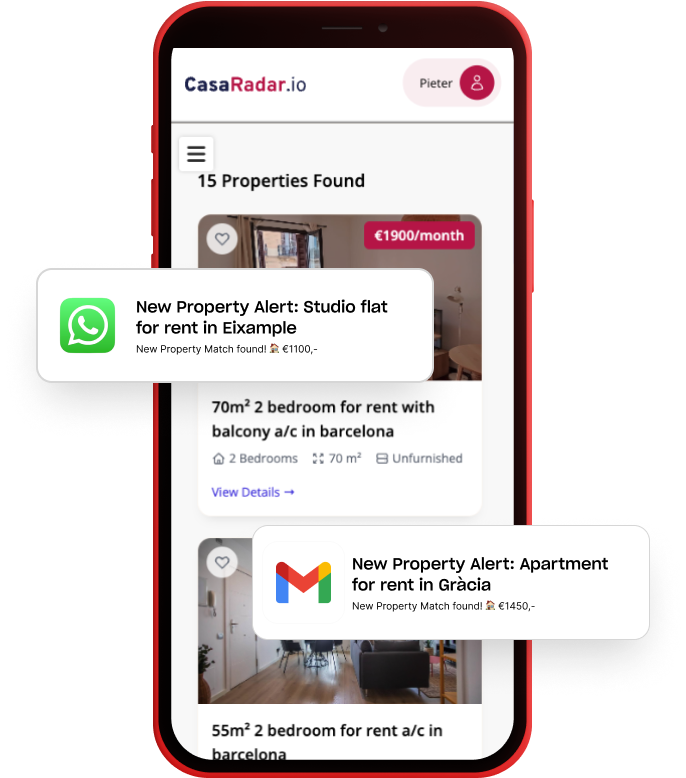
Where Rental House Listings Come to You
We track major and small real estate listing websites in Barcelona — so you don’t have to. Set your housing search criteria, and we’ll send you instant alerts the moment a new rental listing goes live that's fits your requirements.